
Rebuilding pleasure after trauma is not linear
Let's be real. If you've been through something that made your body feel unsafe, the idea of touching yourself can feel loaded. Not broken. Not wrong. Just loaded. Touch-aversion after trauma is a legitimate nervous system response, and it's far more common than people talk about.
Here's what I see in my practice: many people spend years avoiding their own body entirely because being touched felt dangerous. Then they want to reclaim that territory, and they don't know where to start. A lemon vibrator (sometimes called a lem vibrator or clitoral sucker) can be that starting point because it works on your terms, at a distance, without the intensity of a partner's hands.
Why lemon vibrators feel different when you're touch-averse
Trauma often gets stuck in the nervous system as a hypervigilance response. Your body learned to brace. Traditional vibrators work via direct oscillation—thats a lot of input to process if you're already in guard mode.
Clitoral vibrators like the Lem work through gentle suction instead. This matters because suction feels fundamentally different from friction or pressure. It's rhythmic, it's self-contained, and crucially, you control the exact moment it makes contact. There's no surprise. No sudden intensity. You decide when the stimulation starts and stops.
Another thing: when you're using a suction vibrator solo, there's no external person to panic about. No judgment. No unpredictable responses to manage. Your only job is to tune in to what your own body is telling you.
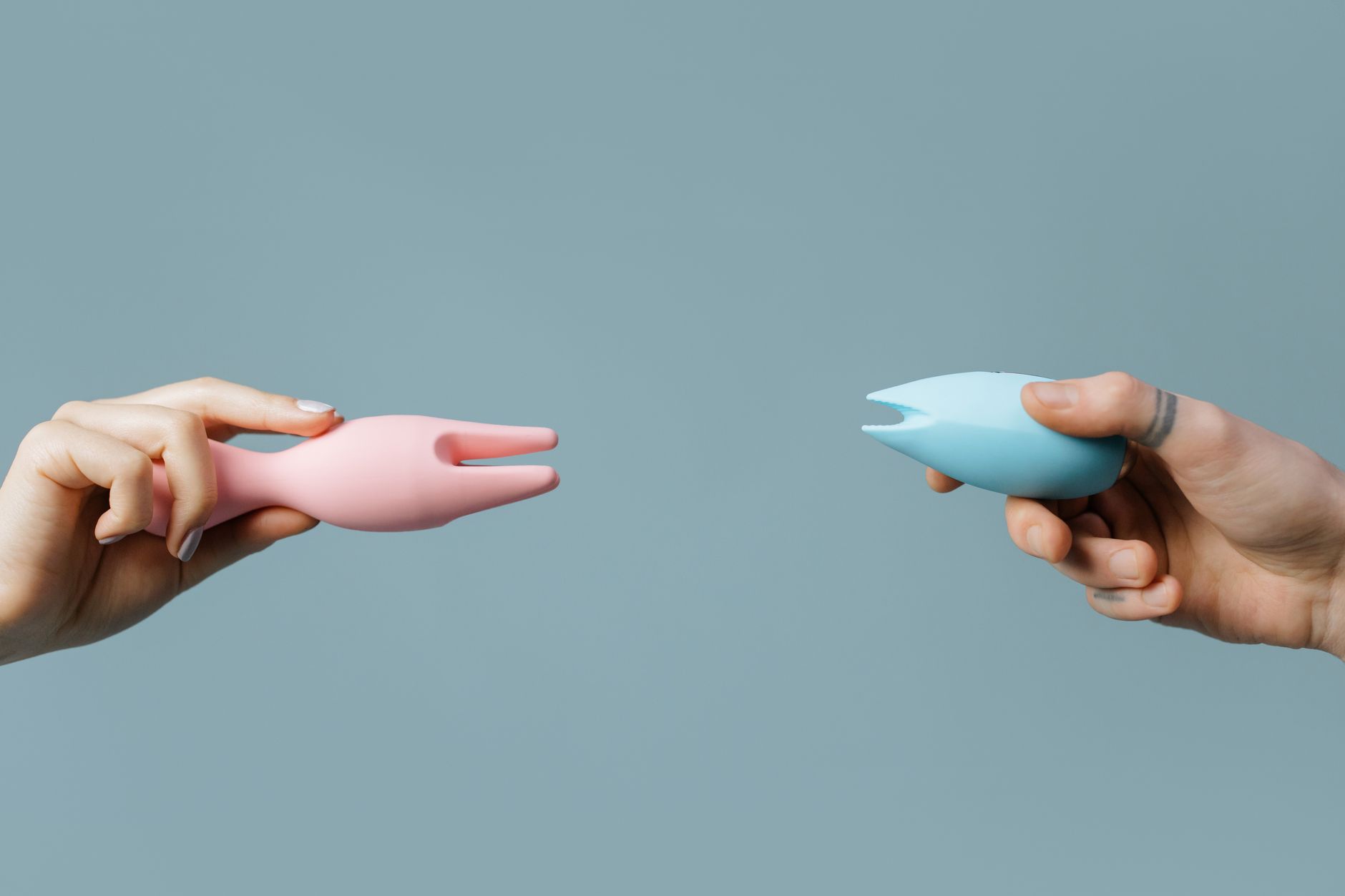
Photo by cottonbro studio on Pexels
Starting with the lowest intensity settings
One of the biggest mistakes people make when rebuilding touch tolerance is going too fast. I tell clients: the slowest pace you think is reasonable is still probably too fast.
With a lemon clitoral vibrator, start at pattern 1. Spend a week there if you need to. The goal isn't to reach orgasm. The goal is to teach your nervous system that this touch is safe. Each time you use it and nothing bad happens, your brain files that under "safe input."
Here's a practical protocol I recommend:
Day 1–3: Hold the vibrator, don't turn it on. Let your hand get used to the shape and weight. Notice if just holding it triggers anything. Don't push through panic. If it does, give yourself a few days and try again.
Day 4–7: Turn it on at the lowest setting for 30 seconds, then off. Repeat 3 times. No pressure to apply it to your body yet. Just acclimate to the sound and sensation of the device itself.
Week 2: Apply it to your inner thigh or pubic mound (not directly on the clitoris yet) for 20–30 seconds at a time. Again, lowest setting. Your nervous system needs to learn that this input is controllable and won't escalate without permission.
Week 3 onward: If you're feeling safe, try brief contact on the clitoris. One minute. Then off. Then on again 10 minutes later. This staggered approach prevents overwhelm.
The timeline is different for everyone. Some people move through this in a month. Others take three. Neither is wrong.
Creating a container of absolute safety
When you're touch-averse, context matters enormously. Your nervous system needs to know that this time and space are non-negotiable yours.
Some practical boundaries I encourage clients to build:
Use the vibrator at a time when nobody will interrupt you. Phone off. Door locked. No roommate likely to knock. Your nervous system can't fully relax if there's a part of your brain monitoring for external threat.
Pick a physical space that already feels safe to you. Bed, bathtub, favorite chair. Not a place where past violations happened. If that means you only feel okay in the bathroom, that's your answer.
Before you even turn on the device, do something grounding. Three minutes of deep breathing. A few minutes with a weighted blanket. Tea. Whatever signals to your nervous system: this is intentional, this is safe, this is mine.
Many clients tell me they set a timer. Knowing that in 10 minutes they're going to stop (not because they have to, but because the session ends) makes it easier to start. Finite containers feel safer than open-ended.
Building arousal when your nervous system is protective
Touch-aversion doesn't always mean you lack desire. Sometimes it means your nervous system got the wires crossed. You want arousal. Your body is stuck in vigilance.
This is where lemon sexual toys become genuinely useful. Because arousal is easier to access when the experience is self-directed.
Start with something non-physical that turns you on. Erotic writing. Audio. A fantasy. Something that builds mental arousal without any physical input yet. Spend 5–10 minutes there. Let your cortex get ahead of your nervous system.
Then introduce the vibrator. Often, the mental arousal creates a kind of momentum that makes the physical sensation feel less threatening. You're not starting from neutral. You're starting with your brain already believing this is going to feel good.
This is also why privacy matters so much. You need to be able to fantasize, to engage your full self, without any part of your attention going to monitoring for danger. Solo use of a clitoral vibrator lets you stay completely in your own world.
When to involve a partner (and when not to)
Some people ask whether they should let a partner use the vibrator on them. My answer: not yet.
The entire point of rebuilding after trauma is reclaiming agency over your own body. As long as someone else is controlling the device, you're still in a position where you have to manage their actions, their pacing, their intentions. That's negotiation, not reclamation.
Once you've spent months using the lem vibrator solo and have rebuilt a sense of safety in your own nervous system, partner involvement can happen. But it's a different conversation, and it comes later. You need to know what solo pleasure feels like first. You need to have proof in your body that touch can be safe.
If you're in a relationship and your partner is frustrated, this conversation about mismatched pleasure needs might help them understand why solo work comes first.
When touch-aversion lifts (it usually does)
One of the things I tell clients is that touch-aversion typically moves in one direction: toward openness. It's not permanent. But it moves at its own pace, and forcing it usually backfires.
With consistent, safe solo use of a clitoral vibrator, most people notice changes within 3–6 months. Your nervous system begins to associate the vibrator with safety and pleasure instead of threat. The pattern shifts.
What's interesting is that many people then find they want different kinds of touch. Maybe they become interested in partner involvement, or maybe they just feel less dread about nonsexual touch like massage or hugging. The whole nervous system relaxes a little.
Some people find they want to explore different lemon clitoral vibrator settings. If you've been hovering at pattern 2 or 3, maybe month four you're ready for pattern 5. Not because there's anything wrong with the lower settings, but because your nervous system has room to expand.
Practical troubleshooting
Panic or avoidance showing up mid-session? Stop immediately. Not with shame. With curiosity. What happened? Did something trigger you? Are you moving too fast? Go back to the previous level. Your nervous system is giving you information.
No arousal even after weeks of trying? This is normal. Trauma can flatline desire for a long time. Talking to a trauma-informed therapist alongside your solo work with a vibrator is worth it. Pleasure isn't the goal yet. Nervous system safety is. Arousal typically follows.
Feeling shame about using a toy? That's carrying someone else's message about your body. Lemon vibrators exist because your pleasure is valid. Period.
FAQ
How long should each session be when I'm rebuilding after trauma?
Start with 3–5 minutes and work up. Short sessions help your nervous system avoid overwhelm. Once you're comfortable, 10–15 minutes is typical. There's no "right" length. You're done when you want to be done.
Can I use a lemon vibrator if I'm taking antidepressants or anti-anxiety medication?
Yes. Actually, some medications make sensation more accessible. That said, some SSRIs can affect arousal and orgasm. If you notice a shift, talk to your prescriber. Don't stop medication to fix pleasure. But knowing the connection helps you troubleshoot what's happening.
What if I orgasm but it feels distant or numb?
That's actually really common in trauma recovery. Your nervous system is protecting you by keeping sensation muted. Keep using the vibrator. Over time, orgasms typically become more integrated. You're rewiring your body's relationship to pleasure, not flipping a switch.
Is it better to use a lemon clitoral vibrator or a traditional vibrator for trauma recovery?
Suction-based clitoral vibrators feel less intense and more controllable for most trauma survivors. That said, some people prefer the familiarity of a traditional vibrator. Experiment and notice what feels manageable. My Lemma Sager offers different options, so you can find what works for your nervous system.
Should I tell my therapist I'm using a vibrator during trauma recovery?
If you have a trauma-informed therapist, yes. They need to know what healing modalities you're using. This isn't about judgment. It's about them understanding the full picture of your recovery. A good therapist will support solo pleasure work as part of nervous system regulation.
How do I know when I'm ready to move past solo use to partnered use?
You'll notice you stop bracing. Your body will feel less vigilant. You might initiate touch with your partner without panic. You can think about intimacy without fear taking over. Those are the signs. You don't graduate on a timeline. You graduate when your nervous system says you're ready.