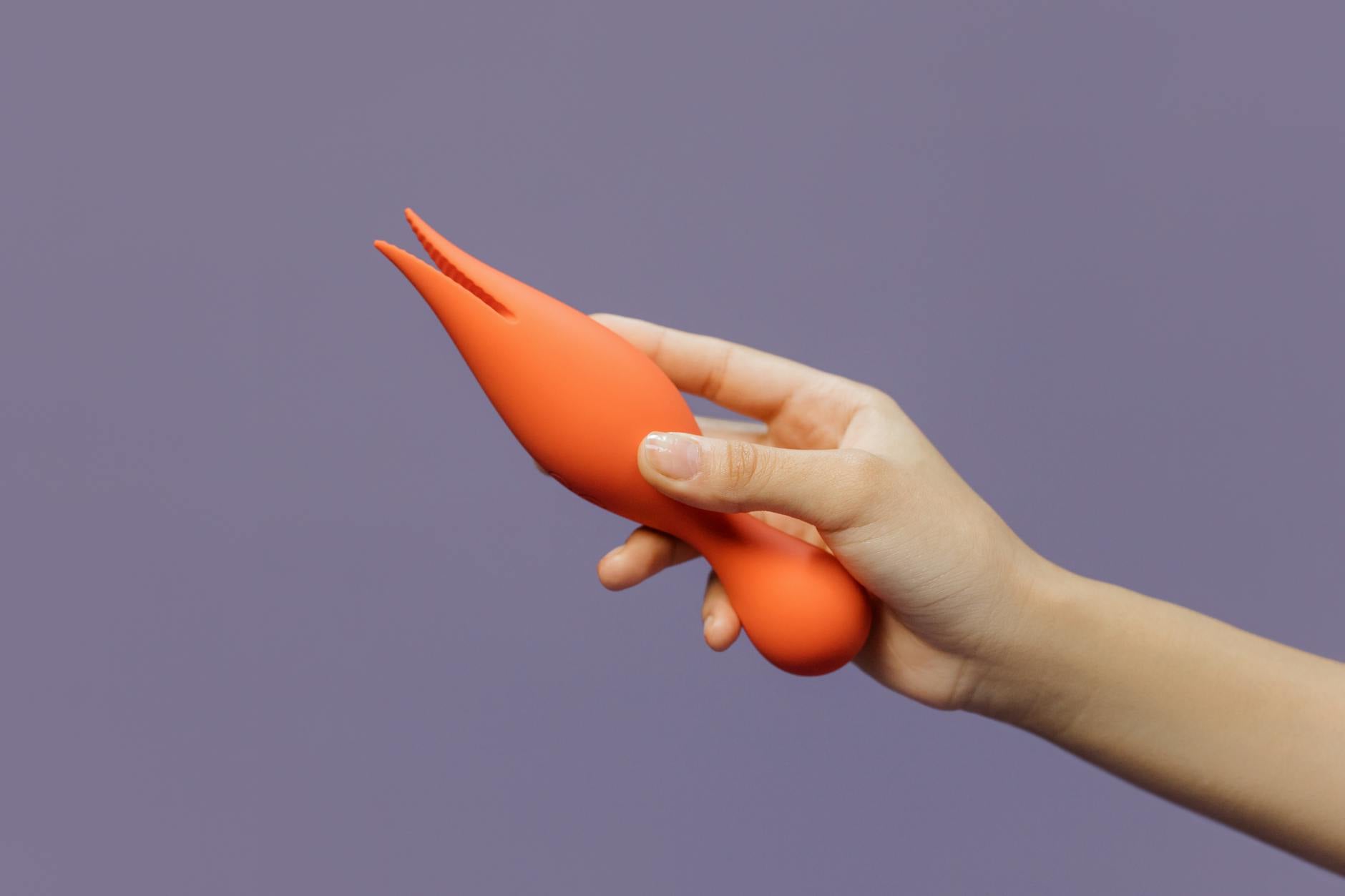
The thing nobody tells you about pleasure and partnership
Here's the honest part: your partner can love you completely and still not understand why you need a clitoral vibrator. It's not a referendum on how he feels about you. It's not a personal rejection. It's just... a gap in knowledge, and gaps in knowledge are fixable.
The problem starts when that gap becomes a shame spiral. You want the vibrator because your body needs it. Your partner interprets it as criticism of his skills. You stop asking. Resentment builds. And suddenly you're both unhappy for entirely preventable reasons.
Why partners get defensive about this (and why it's not your fault)
Most people learn about sex from porn, friends, or trial and error. None of those sources spend much time explaining that penetration alone rarely gets women to orgasm. So when you mention needing clitoral stimulation, your partner's brain translates it as "I'm not enough," even though that's not what you said at all.
He's also operating under the assumption that pleasure should be simpler. In his body, arousal and orgasm happen on a fairly straightforward path. The specificity of what your clitoris needs might feel foreign or even threatening to his ego. That's his work to do, but it helps to know it's coming from somewhere human, not something you caused.
The real conversation to have
Don't lead with the vibrator. Lead with yourself.
"I've been thinking about my pleasure, and I realized I haven't been honest with you about what feels good. I want that to change because I deserve to feel good, and I want you to enjoy that with me." That's the opener. He can't argue with your right to feel good.
Then you can add: "My body needs more clitoral stimulation than penetration alone gives me. That's not uncommon. It's just how I'm wired." You're educating, not criticizing. Big difference.
If he asks why you didn't tell him before, the answer is simple and honest: "Because I didn't know how, and I was embarrassed. But I'm done with that."
Only after this foundation do you introduce the tool. "I want to explore using a clitoral vibrator during sex. Not instead of what we do together. With it. As part of what we do."
How to frame it as an addition, not a replacement
Your partner's fear is usually: "She'd rather have the vibrator than me." You need to dismantle that fear immediately.
The truth is, a lemon vibrator works differently than his hand or mouth or body. It accesses nerve endings in a specific way. It builds stimulation in a way that lets you reach orgasm faster and more reliably. This doesn't make his contribution less valuable. It makes the whole experience richer.
Think about it like this: a good meal doesn't stop being good because you added dessert. The dessert didn't diminish the meal. It completed it.
You can say exactly that. "I want us to have more pleasure together. This tool helps my body get there. It's not about choosing it over you. It's about both of us choosing more satisfaction."
The practical show-and-tell
Once he's receptive (and you'll know because he's asking questions instead of shutting down), show him the vibrator. Not during sex. Just in conversation.
Let him see it. Let him hold it. Explain how it works. Show him the intensity levels. Demystifying it removes a lot of the threat. It's not some mystical replacement. It's a tool with buttons, like anything else.
Then you can say: "I'd like to try using this together during sex. We can start with you just holding it while we're intimate. You're still in control. You're still involved. It just gives my body what it needs."
That framing shifts the dynamic from "you're bringing in competition" to "we're collaborating on your pleasure."
What happens if he's still resistant
Some partners push back harder. "It's emasculating." "You're too dependent on it." "I should be enough."
At this point, you're no longer negotiating his feelings. You're holding a boundary.
"My pleasure matters to me as much as yours matters to you. I'm not asking your permission to feel good. I'm asking you to be part of it. If you can't do that right now, that's something we need to work through together, but my right to explore my own pleasure isn't negotiable."
If he refuses to budge, that's a couples counselor conversation. Because the real issue isn't the vibrator anymore. It's whether he respects your autonomy and your body's needs. Those are foundational.
The shift that happens when he gets it
Here's what I see with couples who work through this: the partner often becomes more invested once he understands. Because now he's not failing at impossible standards. He's participating in something that actually works. And watching your partner experience pleasure the way you experience it is genuinely hot.
Many men discover that helping their partner reach orgasm faster and more reliably is way better for their ego than struggling without tools. It's not a loss. It's a win.
Using the vibrator together
When you're ready to integrate it into sex, start simple. He can hold it while he's inside you. He can use it on you while you're together. Or you can use it while he's there, and he can watch and participate in other ways.
The point is that it's not separate from your intimacy. It's part of it.
For first-timers as a couple, choosing between suction and traditional vibration might feel overwhelming. Start with what feels intuitive. A lemon clitoral vibrator offers suction-based stimulation, which many couples find feels smoother and less jarring than traditional buzzing.
When the vibrator becomes your secret weapon
Once he understands, something shifts. Suddenly the vibrator isn't a threat. It's the thing that makes sex better for both of you. It's the thing that gets you there. It's the thing that makes you both happier.
And honestly? That changes everything. Because now you're not having sex despite your body's needs. You're having sex because both of you are committed to pleasure. All of it.
FAQ: When your partner has questions
Does using a vibrator mean I'm not satisfying my partner?
No. Not even close. Most people with vulvas need clitoral stimulation to orgasm. This isn't a commentary on your skills or how much they desire you. It's basic anatomy. Adding a vibrator usually means faster orgasms and more satisfied partners, which is a win for everyone.
Will my partner become dependent on the vibrator and unable to climax without it?
No. The clitoris doesn't "get used to" vibration the way muscle tissue builds tolerance. Your partner's body will still respond to other stimulation. The vibrator is an addition, not a replacement.
How do I bring this up without making my partner feel like he's failing?
Lead with your own body, not his performance. "I want to explore what makes me feel amazing" is different from "You're not getting me there." One is about self-discovery. The other is criticism.
What if my partner agrees to try it but then stays quiet during sex?
Talk about it afterward, not during. "I noticed you seemed uncomfortable. Can we talk about what that was about?" Often partners need time to adjust. Stay curious, not defensive.
Can we use a vibrator if my partner has erectile dysfunction?
Absolutely. In fact, a vibrator can take pressure off performance. It ensures you're reaching pleasure regardless of what's happening with penetration. Many couples find this actually helps with ED because it removes the anxiety.
How often should we use it?
Whatever works for you both. There's no "too much." Some couples use it every time. Some use it when they want faster orgasms. Some use it when they want to try something new. There's no wrong answer.
The thing they don't teach in relationships
Your pleasure is not your partner's responsibility, and it's also not your burden to hide. You're allowed to have needs. You're allowed to ask for tools that meet those needs. You're allowed to prioritize feeling good.
The partnership that survives and thrives is the one where both people can say "here's what I need" without shame. That's what using a lemon clitoral vibrator together actually teaches you: that desire is collaborative, that pleasure matters, and that the right tools make everything easier.
Start the conversation this week. Not with the vibrator. With yourself.