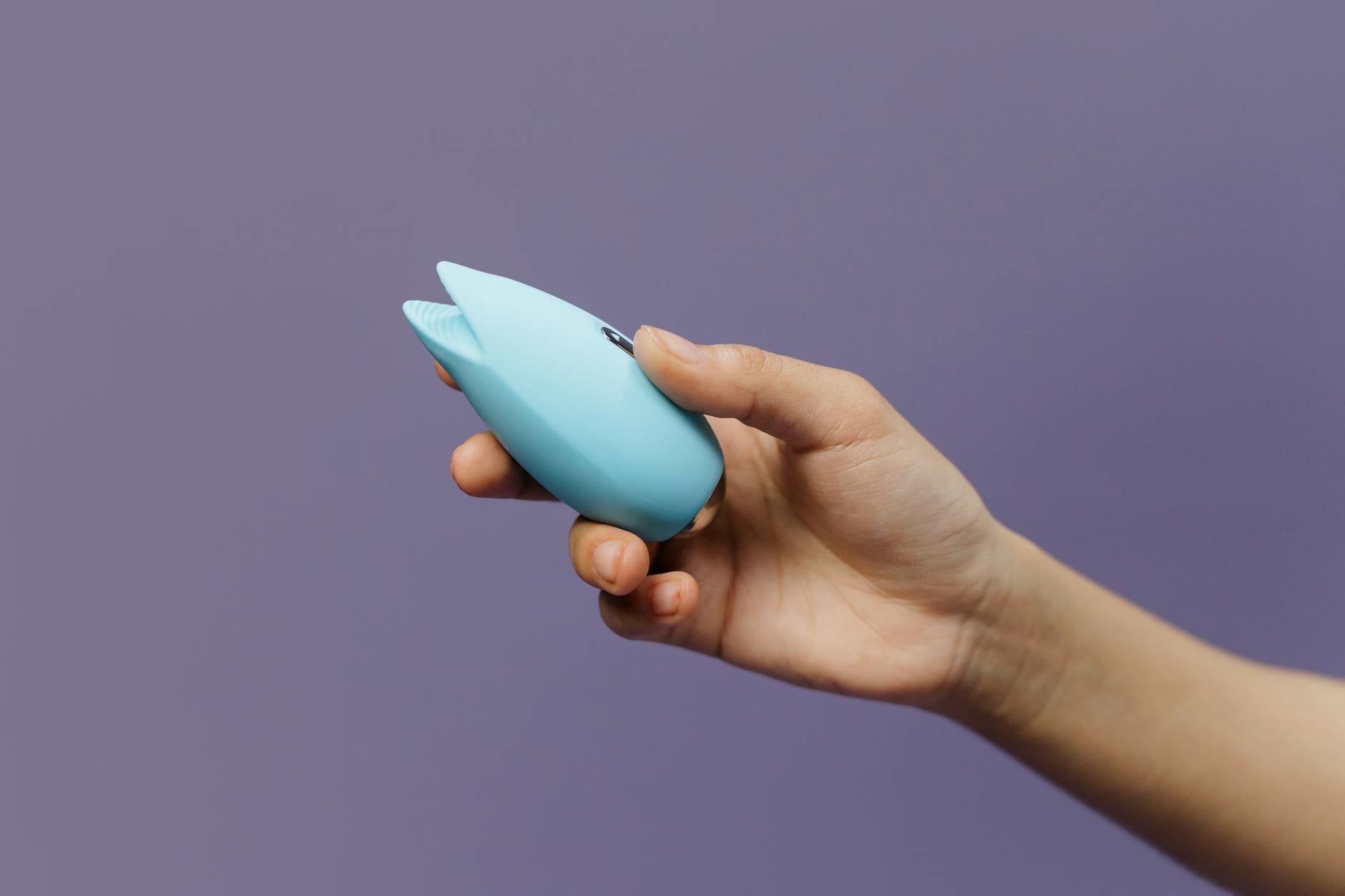
Let's talk about the elephant in the bedroom
Noise during sex matters more than most articles admit. Whether you're sharing walls, raising kids, living with roommates, or just prefer intimacy that feels private and unannounced, the hum of a traditional vibrator can feel like an unwanted third party. That's not prudish. That's practical. And it changes the landscape of what actually feels good.
Lemon vibrators solve this differently than you'd expect. They're not quiet because they're underpowered. They're quiet because of how they work.
How lemon clitoral vibrators actually make less noise
Traditional vibrators create sound through oscillating motors that shake at high frequency. The motor itself is the noise source. Lemon vibrators, by contrast, use suction and air-pulse technology that creates sensation through gentle pressure waves rather than vibration. There's no mechanical buzzing because there's no back-and-forth motion at the same intensity.
The result: a whisper-quiet operation that delivers powerful sensation. We're talking barely audible to anyone outside a closed door. For partners in shared spaces, that's not a small thing.
But here's what actually matters. The quiet isn't a side effect of reduced power. It's a feature of a fundamentally different stimulation method. A suction-based lemon vibrator can be incredibly intense while staying silent.
Why quiet changes the experience for couples
There's a psychological component that doesn't get enough airtime. When you're not worried about being heard, you relax differently. You breathe differently. Your nervous system downshifts because you're not managing the risk of interruption or exposure.
For partners, this shifts the dynamic in three ways.
First, intimacy feels less performed. When the moment is quiet and contained, there's less self-consciousness. People stop managing their sounds and reactions for an audience and start actually experiencing them. Partners report that this creates surprising closeness.
Second, you can be present together longer. No rushing because you're nervous about noise. No cutting things short because someone's about to wake up or come home. Quiet toys often mean fewer interrupted sessions, which means deeper connection overall.
Third, the shame equation changes. Many people carry guilt about masturbation or toy use, especially in partnerships where sex has become infrequent or obligatory. A quiet lemon vibrator makes solo exploration feel less like something you have to hide and more like something you can integrate into your relationship without performance pressure.
The science of silence and arousal
Your nervous system processes threat constantly during sex. One part of your brain is legitimately listening for footsteps, door handles, alarm clocks. That's not neurosis. That's how mammal brains work. When the external threat is removed, more resources go toward pleasure.
Research on stress and sexual function shows that environmental safety directly correlates with arousal capacity. Quiet space allows your parasympathetic nervous system (rest and digest) to activate more fully. That matters for orgasm, for sensation, for everything.
For people who struggle with numbing during arousal or who have anxiety-linked sexual difficulties, a quiet toy can actually improve sensation quality simply because the nervous system is less defended.
Quiet toys work differently in long-term relationships
After years together, couples often describe sex as feeling routine or obligatory. Part of that is hormonal and relational. But part is practical. When your teenager might barge in, when your partner's parents visit, when you live in an apartment with thin walls, the conditions for pleasure shrink.
A quiet lemon clitoral vibrator expands those conditions. You can have a moment during a lazy Sunday afternoon without the whole house knowing. You can explore sensation together without the noise-management anxiety that often kills arousal. It sounds small, but it compounds over years.
I've worked with couples where introducing a silent toy actually revived desire because it made sex feel possible again in their real life, not just in fantasy space.
Integrating quiet toys into partnered sex
If you and your partner are used to traditional vibrators, the quietness might feel strange at first. You might worry you're doing it wrong because you can't hear the motor. You're not.
The benefits show up in how the experience feels, not how it sounds. The suction and air-pulse sensation, freed from motor noise, often registers as more subtle and more intense at the same time. It's a different kind of stimulation, and for most people, it takes two or three uses to understand it.
One practical note: quiet doesn't mean soundless. You'll hear the faint sound of suction and maybe a tiny motor hum. In a quiet room, you might notice it. Behind a closed door with ambient sound, it's essentially inaudible. This matters for partners who are genuinely concerned about being heard, versus those who just prefer less obvious mechanics.
When quiet becomes essential
For some couples, a quiet toy isn't optional. If you're co-sleeping with small children, caring for elderly parents, living in close quarters, or simply value privacy as a non-negotiable part of intimacy, silence matters.
There's also the consideration of neurodivergence. Some people with sensory processing sensitivities find traditional vibrator noise genuinely distracting or uncomfortable. For them, a quiet lemon vibrator isn't a preference. It's functional.
And for partners who feel embarrassed about their own bodies or sexuality, the reduced attention from an obvious mechanical noise can lower the activation energy enough to try. That's not subtle. That's significant.
The unspoken benefit: exploration without performance
Quiet toys often make solo exploration feel less loaded. Without the obvious buzz, masturbation can happen without it feeling like a production or announcement. This matters more than it sounds, especially for people in partnerships where one partner has higher desire.
When you can explore without that implicit performing-for-someone-else feeling, you often discover what actually works for your body. That knowledge then feeds back into partnered sex. You show up with clearer information about what feels good, which paradoxically makes sex with your partner better.
This is why quiet toys, counterintuitively, often improve couple sex rather than replacing it.
FAQ: Quiet toys and partnership pleasure
Are quiet lemon vibrators as powerful as loud ones?
Yes. Suction-based vibrators like the lemon clitoral vibrator deliver intensity through air-pulse pressure rather than mechanical buzz. Many people find them more powerful than traditional vibrators, just in a different way. The quiet isn't a tradeoff for power. It's a feature of the design.
Can my partner and I use a quiet lemon vibrator together without it feeling awkward?
Absolutely. The quiet actually helps. Without the obvious motor sound, it can feel like a natural part of foreplay instead of introducing an obvious tool. Many couples find that quiet toys integrate into partnered sex more seamlessly than loud ones because they require less mental shifting.
Will a quiet vibrator feel weird if I'm used to traditional vibrators?
Probably for the first use. The sensation is different because suction stimulates nerves differently than vibration. Most people adapt within two or three sessions. You might actually prefer it once you adjust. The sensation often feels more nuanced and localized.
If I live alone, why would I choose a quiet toy?
Because quiet toys are often more subtle and more precise. Even alone, you might prefer the sensation profile, the lower noise baseline, or the different stimulation pattern. Quiet isn't only about other people. It's also about the experience itself.
Can quiet toys be used during partnered sex if my partner has low desire?
Yes, and sometimes this actually helps. When a quiet toy feels less like an obvious intervention and more like a natural part of intimacy, it can feel less pressure-laden for the partner. The quiet can make it feel more collaborative and less like one person is trying to fast-track the other.
What's the learning curve for using a quiet lemon vibrator for the first time?
Short. Unlike some toys, lemon vibrators are intuitive. You hold it against your clitoris at the angle that feels best, and the suction does the work. There's no technique required. Most people figure out their preference in the first few minutes.
The practical reality
Quiet matters. Not because there's anything wrong with loud pleasure, but because most of us live in constrained spaces with multiple people. The toy that actually works for your life is better than the theoretical best toy that creates logistical stress.
A quiet lemon vibrator bridges that gap. It delivers the sensation you want without the announcement you didn't ask for. For couples managing real-world constraints while trying to maintain intimacy, that's not a small thing. That's the difference between exploring pleasure as an integrated part of your relationship and cordoning it off as something separate and complicated.
Your pleasure doesn't have to be loud to be powerful. Sometimes the quietest devices teach us the most about what we actually want.