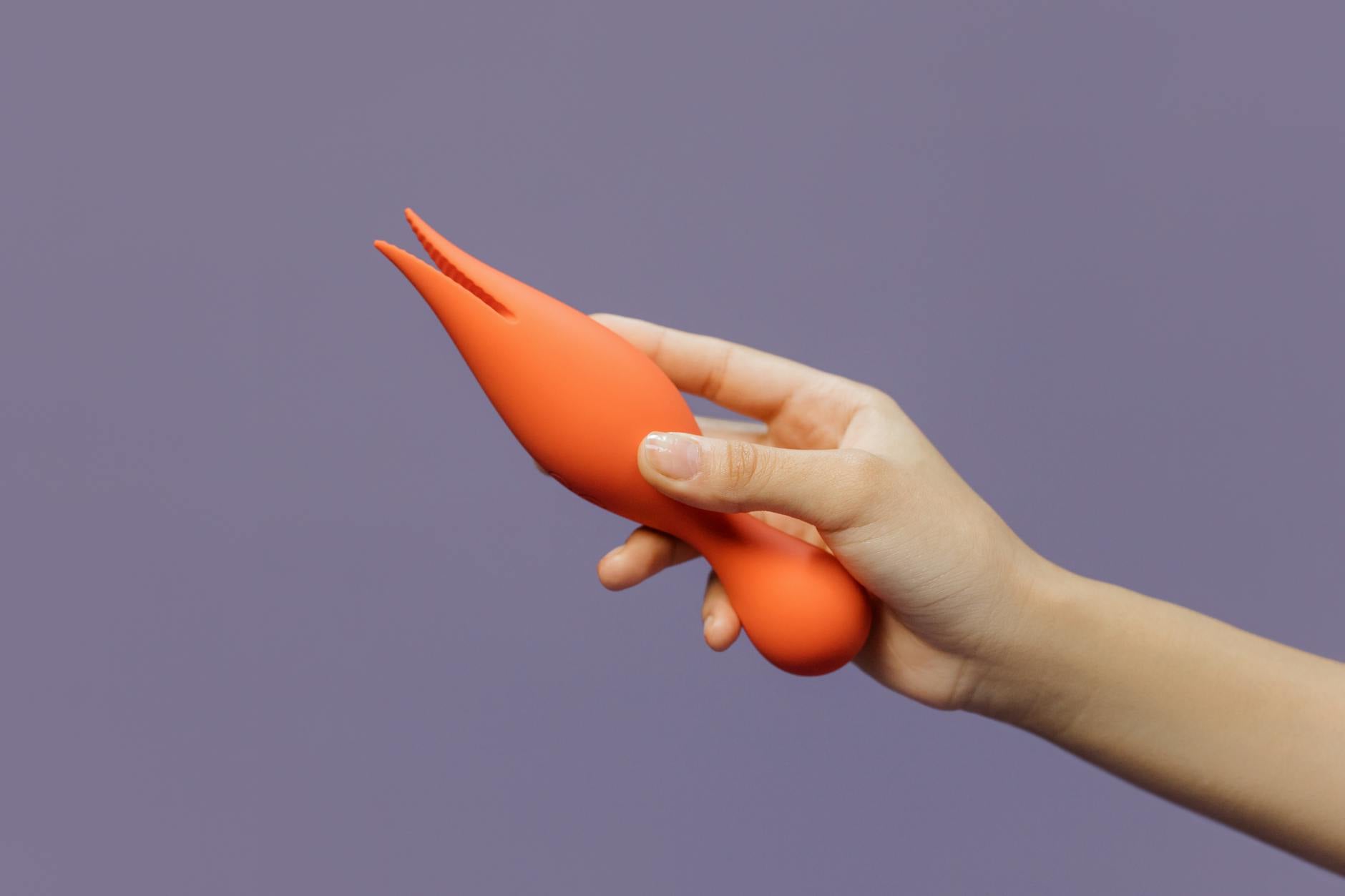
Here's the thing about lemon vibrators
Not all clitoral stimulation feels the same. The difference between a suction-style lemon vibrator and a traditional buzz vibrator isn't subtle. One creates a rhythmic pulse that feels almost like a gentle mouth. The other is, well, a vibration. Both work beautifully. But they work in completely different ways, and which one you prefer often comes down to how your body responds to sensation.
I've worked with plenty of people who swear they'd never go back from suction. I've also worked with people who tried a lemon sucker and felt nothing, while a steady high-frequency buzz changed their life. The point is this: knowing what actually happens when you use each type helps you stop guessing and start choosing.
How suction-style clitoral vibrators actually work
A suction vibrator, like the Lem, doesn't vibrate in the traditional sense. Instead, it uses gentle air pulses to create a rhythmic suction sensation around the clitoris. Imagine the difference between someone buzzing their lips against your skin versus someone creating a soft, rhythmic pull. Same area. Completely different nerve activation.
The mechanism is simple: air enters and exits a small chamber, creating waves of gentle pressure. The intensity ramps up or down depending on the speed setting, but the fundamental sensation remains the same. Suction vibrators tend to feel more concentrated and focused because they're stimulating the entire clitoral area at once, rather than individual points.
This matters because the clitoris is sensitive to pressure and indirect touch. Many people find that direct vibration can become uncomfortable or overstimulating quickly, while suction feels like a natural escalation that never tips into pain. It's also why suction vibrators can feel particularly good for people with sensitive tissue, or anyone who finds traditional vibrators too intense.
Traditional vibration: the standard that still works
Traditional vibrators, by contrast, operate at a frequency measured in hertz. Most range between 5,000 and 12,000 hertz, which means the motor is oscillating thousands of times per second. That creates a consistent buzz that stimulates nerve endings through rapid, repetitive contact.
The advantage here is precision and familiarity. You can find a pattern and a speed that works, and then stay there. Many people describe traditional vibrators as straightforward. The sensation builds in a predictable way. The speed dial gives you control over intensity in small increments. There's no learning curve once you find your frequency.
Traditional vibrators also come in wildly different shapes. Some are targeted (like a small bullet), others are broad (like a wand). The shape affects how the vibration spreads across the clitoris, which is why someone might love one vibrator and feel nothing from another. Shape + frequency + intensity = a lot of possible combinations.
The sensations are genuinely different
I'll be direct: most people can feel an immediate difference the moment they try both. Suction tends to feel more like manual stimulation, more dynamic, almost alive. Traditional vibration feels more mechanical, more consistent, more like a steady hum.
Suction vibrators create a build-and-release pattern that many people find mirrors natural arousal. The rhythm can feel educational because it teaches your body where to go next. Traditional vibrators let you stay at one intensity level and layer other sensations on top.
Honestly, the best way to know which you prefer is to try both. But if you can't access both right away, here are the patterns I see clinically. People who prefer suction tend to be sensitive to direct touch. They often mention that regular vibrators make them numb or tense. They like a feeling of rhythm and flow. People who prefer traditional vibration tend to want something predictable. They often like sustained intensity over changes in pattern. They enjoy being able to fine-tune frequency.
Neither is better. They're different enough that they're almost different tools.
The anatomy piece that matters
Here's what I wish everyone understood: the clitoris is way bigger than the visible part. The external glans, the visible bump, is just the tip. The clitoral body and crura extend internally, up and back into the pelvis. A suction vibrator tends to stimulate that external glans more directly. A traditional vibrator, depending on the shape, might stimulate the whole clitoral structure differently.
This is why one person can feel everything with a suction vibrator and someone else feels almost nothing. The nerve distribution isn't identical across everyone. The angle matters. The pressure matters. The rhythm matters. All of these variables combine to create a personal pattern of what works.
If you're someone who has been told "you should try" a certain type of vibrator and it didn't work, that's not a failure. It's information. Your body is telling you something real about how it responds to sensation. Listen to that.
Intensity, speed, and finding your middle ground
Suction vibrators typically offer a range of intensity levels rather than granular speed control. You'll see something like "7 settings" rather than a dial from 1 to 100. Traditional vibrators often have more precise control, though not always.
Intensity in a suction vibrator builds up through the strength of the pulse. At level 1, you might feel a gentle rhythm. By level 7, that same rhythm is much stronger. The pattern stays the same, but the power increases. Traditional vibrators tend to build intensity by increasing frequency. A low buzz becomes a higher buzz. Some people prefer ramping intensity this way because it feels more like a crescendo.
For what it's worth, I recommend starting at the lowest setting with either type. Let your body adjust. You can always turn it up. You can't un-turn-it-up once you're already overstimulated. This is where a lot of people get frustrated. They think a vibrator doesn't work, when actually they started at level 5 of 7 and numbed themselves out.
Comfort, sensation, and what changes across your cycle
Your sensitivity to vibration isn't constant. Hormonal shifts, stress, how much sleep you got, whether you've had an orgasm recently, even what you ate that day can all subtly change how you respond to sensation. This is why something that felt amazing last week might feel different this week.
Suction vibrators, in my experience, are more forgiving across these shifts because they're not relying on constant direct pressure. Traditional vibrators can feel too intense when you're already aroused and more numb when you're just starting out. This makes traditional vibrators harder to use consistently across different days and contexts.
Neither is a deal-breaker. Just something to track if you're using a vibrator regularly. You might find that you reach for suction on high-sensitivity days and traditional buzz on days when you need something stronger.
If you've only tried one type
If you've only used a traditional vibrator and never tried a suction-style lemon clitoral vibrator, or vice versa, here's my honest advice: it's worth exploring the other. Not because you're doing it wrong with your current one, but because the difference is significant enough that it might genuinely expand what you know about your own pleasure.
That said, if you've found something that works and you're consistently satisfied, you don't need to change anything. Pleasure isn't a hierarchy. A vibrator that works is the right vibrator, full stop. But curiosity is also valid. Trying something new doesn't invalidate what you already like.
People also ask
Which type of vibrator is better for beginners?
Suction vibrators like the Lem often feel more intuitive for people new to vibrators because the sensation is closer to manual stimulation. There's less risk of overstimulation because the pulsing sensation feels more natural and builds more gently. That said, traditional vibrators are also beginner-friendly if you start at a low setting and work up. The real answer is: whichever one intrigues you more is the better choice for your first one.
Can you use a lemon suction vibrator with a partner?
Absolutely. Suction vibrators work great during partnered sex or foreplay. The sensation doesn't require a specific angle or positioning the way some traditional vibrators do. You can use it with a partner internally or externally, during penetration or on its own. The key is communication about what intensity feels good and whether you want the pattern to stay consistent or change.
Do suction vibrators work on sensitive skin?
Yes. In fact, many people with sensitive tissue prefer suction vibrators precisely because they don't involve direct vibration on delicate skin. The pulsing sensation is gentler and less likely to create the numbing or irritation that sometimes happens with traditional vibration. That said, everyone's sensitivity is different. If you have very sensitive skin, starting at the lowest setting is important with any vibrator.
Why does my traditional vibrator feel numbing?
Numbing usually happens when you're using the vibrator at a setting that's too high for where your arousal is at that moment, or when you're using it for too long without a break. It can also happen if the frequency doesn't match how your nervous system responds. Some people's bodies adapt quickly to a steady vibration and need higher intensity to feel anything. This is where suction vibrators can be helpful because the pulsing rhythm feels different enough to your nerves that it resets the sensation.
Are lemon vibrators the same as all suction vibrators?
No. Different suction vibrators create different pulse patterns and intensity ranges. Some are stronger, some are softer, some have different rhythm options. The Lem, for example, is designed for broader clitoral stimulation with a gentle ramp-up in intensity. Other suction vibrators might feel different. If you try one and it's not your match, another suction vibrator might be. The category helps, but the specific tool still matters.
Which should I choose: suction or traditional?
Honestly, start with whichever one appeals to you more. If you like the idea of rhythm and pulsing, try suction. If you prefer a steady hum you can control, try traditional. If you're torn, consider that suction vibrators are often gentler on sensitive tissue, which means they're a lower-risk first choice. But I've seen people fall in love with traditional vibrators too. Your best match is the one that actually gets you off. Everything else is just detail.
The bottom line
You don't have to choose between them permanently. Some people love having both and use each in different contexts. Someone might reach for a suction vibrator during solo exploration and a traditional one during partnered time. Others discover they prefer one overwhelmingly and never look back. That's all normal.
What matters is that you try enough to actually know what your body responds to. Not what you think you should prefer. Not what worked for a friend. What actually lights you up. Start there, stay curious, and don't be afraid to change your mind as you learn more about what works for you. Your pleasure is worth that kind of attention.