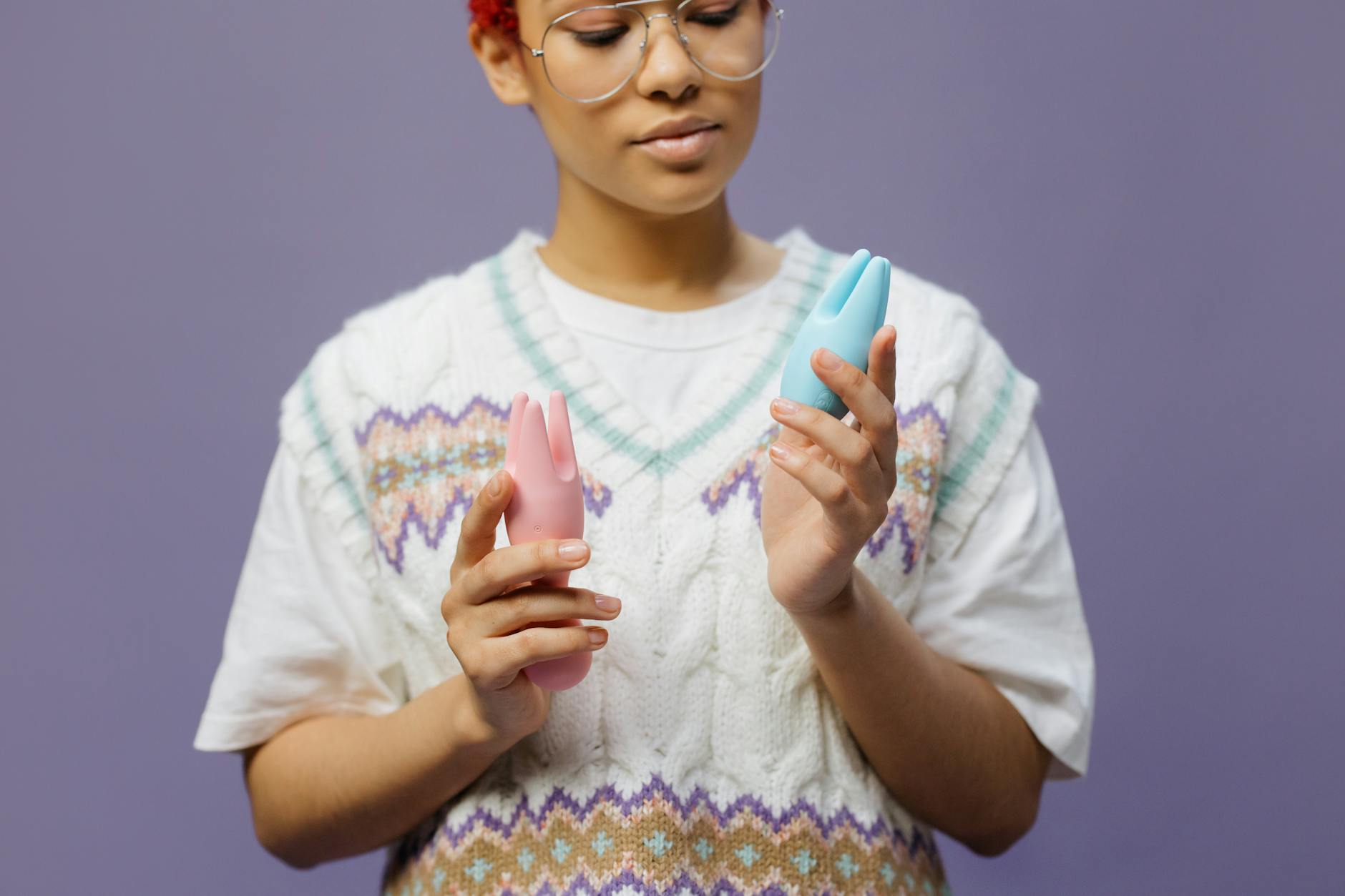
You're not losing your mind. You're losing sensation.
You're using your lemon vibrator, everything feels good for the first minute, and then suddenly it's like you're holding a phone on vibrate. Still there, still buzzing, but the feeling has basically vanished. You crank the intensity. Nothing. You switch patterns. Still nothing. So you assume the toy is dying or you're broken or your body just doesn't work the way it used to.
None of those things are true. What's happening is called sensory adaptation, and it's a completely normal neurological response that every person with a clitoris experiences. The good news? Once you understand what's going on, fixing it is actually straightforward.
What sensory adaptation really is
Your nervous system is wired to notice change. A steady vibration at the same intensity, on the same spot, for more than a few minutes triggers your nerve endings to stop firing the same way. It's not laziness. It's efficiency. Your brain basically says "noted, constant sensation, moving on." The sensation hasn't gone anywhere. Your nervous system just stopped reporting it.
This happens with everything: a piece of clothing against your skin, a constant humming noise, even a strong smell. Your clitoris is just more sensitive to this process than, say, your arm, because it has an incredibly high concentration of nerve endings. That's good news for intense sensation, but it also means adaptation happens faster.
The frustrating part is that the plateau often hits right when you're building toward orgasm. You feel yourself climbing, the vibration becomes almost invisible, and suddenly you're convinced either your toy is broken or your body is broken. It's neither.
Why lemon clitoral vibrators help more than traditional toys
A conventional vibrator uses constant, consistent vibration. Your body adapts to that steadiness. A lemon vibrator (and other suction-based clitoral vibrators) works differently. Instead of constant vibration, it uses pulsing suction that mimics the rhythm your body naturally creates during arousal and orgasm.
The key difference: that pulsing pattern means your nerve endings are getting variable stimulation rather than a flat, unchanging signal. Variable stimulation doesn't trigger adaptation the same way. You get sustained sensation because the stimulus itself is changing.
This is also why switching between patterns on a lemon vibrator helps, even if you're using the same toy. A new pattern is a new stimulus, so your nervous system wakes back up.
The buildup is working against you (and what to do about it)
Here's the counterintuitive part: the more aroused you are, the faster adaptation happens. As you get closer to orgasm, blood rushes to the clitoris, your tissue engorges, and nerve sensitivity actually increases. But that same engorgement also presses the tissue closer to the vibration source, which can sometimes push you past the sweet spot into numbness.
There are three things that help:
Change the angle. Even a slight shift in how the toy sits against your body breaks the pattern and brings sensation roaring back. Your lemon vibrator works best with a bit of movement, not stationary pressure.
Use a cycle-and-rest rhythm. Most people try to keep constant contact because they think stopping will kill the momentum. It won't. Try 2-3 minutes of steady suction, pull away for 15-30 seconds, then go back in. That break resets your nerve endings.
Layer in mental focus. Numbness often feels like you're losing the plot. Consciously naming what you're feeling, thinking about what you want next, or even just syncing your breathing with the vibration pattern keeps your brain engaged. Your clitoris can't feel what your brain isn't paying attention to.
The arousal feedback loop that works against you
When you start to lose sensation, your instinct is usually to push harder: more intensity, longer contact, faster patterns. I get it. But that's actually the move that makes adaptation worse. More stimulus doesn't fight adaptation. It accelerates it.
Instead, the physiological answer is less intensity, more variability. This feels counterintuitive because it seems like you're doing less right when you need to do more. But your nervous system doesn't respond to "more." It responds to "different."
This is why partner involvement can genuinely help, not because someone else touching you is inherently better, but because another person introduces unpredictability. You don't know exactly when the next touch is coming. You can't anticipate it perfectly. That unpredictability keeps your nervous system engaged.
Medical reasons for persistent numbness (when to actually worry)
If numbness is happening consistently, across multiple toys, and you can't get sensation back even with breaks and angle changes, something else might be going on.
Diabetes, certain medications (especially some SSRIs and antipsychotics), pelvic nerve damage, or reduced blood flow to the clitoris can all cause persistent numbness that isn't just adaptation. These aren't common, but they're worth discussing with your doctor if it's a pattern.
Hormonal changes also matter. If you've recently started birth control, hit a new phase of your cycle, or are in perimenopause, your clitoral sensitivity can shift. That's usually temporary, but it's worth knowing it's not a personal failing.
The test: can you feel normal touch sensation on your clitoris when you're not using a toy? If yes, it's almost certainly adaptation. If no, or if you notice numbness spreading to other body parts, that's a conversation to have with a healthcare provider.
Why technique beats gadgets every time
I've watched people buy five different toys trying to solve numbness, when the actual fix costs nothing. It's learning to use what you have differently. The lemon vibrator is genuinely an excellent tool for this because that suction mechanism naturally fights adaptation better than vibration alone. But even with the best toy, technique matters more.
That means building a personal map of what actually works for your body. Some people thrive with a 2-minute cycle. Others need 4 minutes of contact before they reset. Some people need a full 60-second break. Some need just 10 seconds. You're not looking for the universal rule. You're looking for your pattern.
Write it down if that helps. Sounds weird, but "sensation comes back reliably if I use pattern 3 for 2 minutes, rest for 30 seconds, then switch to pattern 1" is legitimately useful information. Your body isn't random. It's predictable once you know how to read it.
The permission piece
A lot of people interpret numbness as a signal that they should push through. Toughen up. Concentrate harder. Want it more. That's backwards. Numbness is literally your nervous system telling you it's overwhelmed. The answer is to ease back, not push forward.
Your body deserves to feel good without strain. That's not laziness or lack of desire. That's how pleasure actually works. The people I know with the best sex lives aren't the ones grinding through numbness. They're the ones who've figured out how to work with their nervous system instead of against it.
That might mean your sessions look a little different from what you imagined. You might need more breaks. You might need to switch toys or patterns mid-session. You might need to involve your partner differently. All of that is completely fine. What matters is sensation that feels good, not a performance that looks good.
Your clitoris is smart. It's not shutting down on you. It's asking you to mix things up.