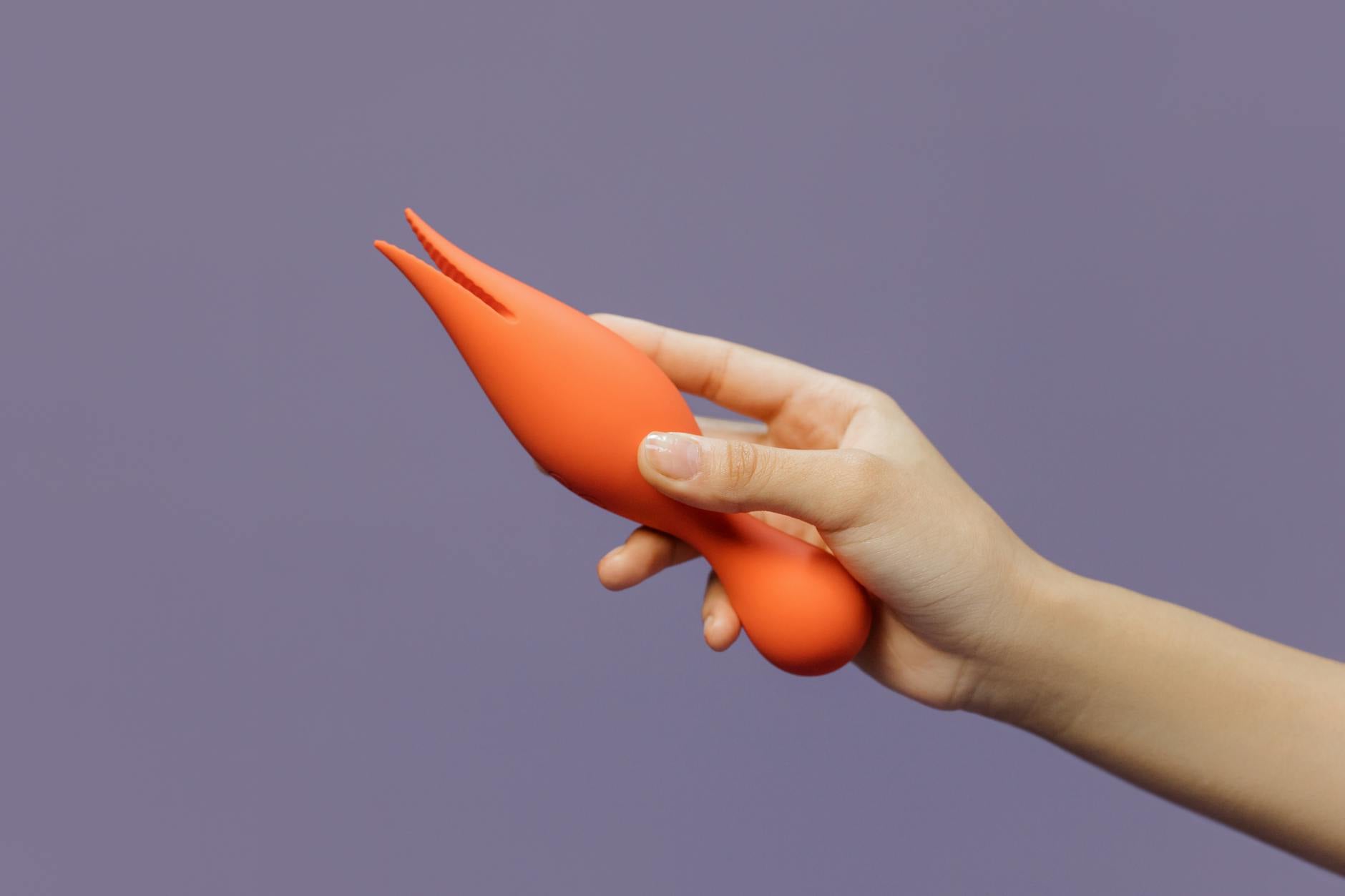
Why Lemon Vibrators Give More Intense Orgasms After 40
Let's be real. Your body after 40 feels different during sex. Everything takes a beat longer to warm up. Direct stimulation sometimes feels rawer than it did at 25. But here's what nobody tells you: the orgasms can actually get stronger. Not weaker. Stronger.
This isn't motivational speak. It's neuroscience. And it explains why so many people discover lemon vibrators in their 40s and report that their orgasms have shifted from "fun and frequent" to "oh my god, I didn't know my body could do that."
How your nervous system actually changes after 40
Your clitoris doesn't age. The nerve endings are still there. What changes is the architecture of the tissue around it and how your nervous system responds to stimulation.
After 40, estrogen levels begin dropping (even before menopause). This means the tissue covering the clitoral complex gets thinner and more sensitive. You might think that sounds bad. But sensitivity is not the same as fragility. Thinner tissue means the nerves are closer to the surface. Stimulation reaches them faster and more directly.
At the same time, your pelvic floor muscles have spent 40 years contracting during arousal and orgasm. They've gotten better at it. More coordinated. The rhythmic contractions during climax become more pronounced because the muscles know their job.
Your brain also changes. The anterior insula, the part of your brain that processes physical sensation and emotional response, becomes more efficient. After decades of sexual experience, your brain has built shortcuts. It knows what you like. It can drop you into deep pleasure faster.
Why suction technology works better for this shift
Traditional vibrators use friction. They buzz directly against tissue. That works when tissue is thicker and less sensitive. But after 40, direct vibration on thinner tissue can feel overwhelming or even painful.
Lemon clitoral vibrators use suction. They create a gentle pulling sensation that stimulates the entire clitoral complex, not just the surface. This approach matches what your body has become. It's less raw. It's deeper.
The suction reaches the internal roots of the clitoris, which extend several inches inside your body. When you were 25, you might not have felt that depth as clearly. Your thicker tissue muffled it. Now that tissue is thinner, the sensation of suction working on the whole structure is more distinct.
This is why people who switch from traditional vibrators to a lemon vibrator at 40 or 50 often say it feels like they've discovered a part of their body they didn't know existed.
The mental shift that matters more than the physical one
Here's the thing nobody talks about: by 40, you've stopped performing.
In your 20s and 30s, a lot of sexual pleasure got tangled up with approval. Looking right. Finishing in the right timeframe. Making your partner feel successful. Your nervous system was dividing attention between sensation and surveillance.
After 40, a lot of that falls away. You're less worried about how you look. You're less concerned with timing. You might have better boundaries with partners, or you might be more comfortable alone. Either way, the mental bandwidth that used to go toward monitoring and performing is suddenly available for actual sensation.
Add a lemon vibrator into that headspace, and something shifts. The technology is doing the work. You're not managing anything. You're just receiving stimulus and noticing what happens.
Research on female orgasm shows that the biggest predictor of orgasm intensity is not physical technique. It's mental attention. The more present you can be with sensation, the more intense the orgasm becomes.
Why intensity increases even as sensation takes longer to build
There's a paradox most people experience after 40: it takes longer to get aroused, but once you're there, the orgasms feel bigger.
This is because arousal has two components. The first is genital response: lubrication, swelling, blood flow. This does slow down after 40. You might need 15 minutes instead of 5.
But the second component is mental arousal and nervous system engagement. This actually deepens over time. Your brain gets better at dropping into pleasure. The sensation pathway becomes more refined.
Once your body is fully aroused, the lemon vibrator's suction technology meets that deeper capacity head-on. The sensation isn't fighting against surface-level awareness. It's flowing into a nervous system that's ready to receive it fully.
That's why orgasms often feel more full-body after 40. The intensity isn't localized. It ripples through you because your nervous system has evolved to integrate sensation across more area.
The role of dopamine and the pleasure reward cycle
When you orgasm, your brain floods with dopamine. This is the pleasure neurotransmitter that also drives motivation and desire.
After 40, your baseline dopamine levels might be slightly lower than they were at 25. But your dopamine receptors, the cellular sites where dopamine has its effect, become more sensitive. This means you need slightly less dopamine to get a significant pleasure response.
A lemon clitoral vibrator is particularly efficient at triggering dopamine release because suction is a novel stimulus for most people. Novelty is one of the strongest triggers for dopamine. Even if you've been using vibrators for 20 years, switching to suction technology creates that "oh, that's different" moment in your nervous system.
The orgasm that follows often feels more rewarding because your dopamine system is working at peak efficiency on less chemical cargo.
How to actually use a lemon vibrator to maximize this shift
If you're picking up a lemon vibrator for the first time after 40, a few things will help.
First, give yourself longer than you think you need. Budget 20-30 minutes, not because something is wrong with you, but because your arousal curve is gentler now. This isn't a limitation. It's an invitation to slow down.
Second, start on the lowest suction setting. Your thinner tissue will respond quickly. You don't need high intensity to reach sensation. Many people find that settings 1 and 2 on a quality lemon vibrator deliver more intense orgasms than setting 5 did on their old vibrator.
Third, pay attention to what your pelvic floor is doing. After 40, you might notice tighter sensations, even tension. A few seconds of intentional relaxation before you start can change everything. Breathe into your belly, not your chest. Let your pelvic floor soften.
Finally, if you're using a lemon vibrator with a partner, the fact that it works through external suction means you have both hands free. You can touch your own breasts, your neck, your thighs. You can ask for touch from your partner. Pleasure isn't coming from one focused point anymore. It's coming from everywhere.
What if intensity doesn't match the hype
Look, not everyone's neurology is the same. Some people feel immediate intensity with suction. Others need weeks to adjust. Some find that traditional vibrators still work better for them, and that's completely fine.
If you're trying a lemon vibrator and it feels "meh," give it at least five or six sessions before deciding. Your nervous system is learning a new stimulus. It takes time to integrate.
If you're still not feeling much after regular use, you might be dealing with reduced sensitivity from medication (certain antidepressants and blood pressure drugs do this), lower dopamine baseline, or just a different neural wiring. None of those are problems. They're just information.
There's no universal orgasm experience after 40. But there is a specific window where your body's actual capacity for pleasure is higher than it's ever been. Suction technology like a lemon vibrator is designed to meet that capacity. Whether it's right for you is something only your body can tell you.
Frequently Asked Questions
Do lemon vibrators work better for everyone after 40?
No. Pleasure is individual. Some people find that traditional vibrators still work best. Others switch to suction and never look back. The advantage of a lemon clitoral vibrator after 40 is that it matches the tissue and nervous system changes that typically occur. But your body might be wired differently, and that's not a deficit.
How is a lemon vibrator different from a regular vibrator?
Traditional vibrators use rapid oscillation against tissue. Lemon vibrators use rhythmic suction, which stimulates the clitoris and surrounding tissue without direct friction. After 40, when tissue is thinner and more sensitive, suction often feels less intense on the surface but deeper overall. Many people report stronger, longer orgasms with suction.
Why do orgasms feel more intense at 40 than at 25?
Three main reasons: your pelvic floor muscles are more coordinated, your nervous system has built efficient pleasure pathways, and you're likely less anxious about performance. Your brain can devote full attention to sensation. Additionally, thinner tissue after 40 means stimulation reaches nerves more directly, creating a more concentrated sensation.
Can I use a lemon vibrator if I'm on antidepressants?
Yes, but be patient. Many antidepressants reduce sensation or make orgasm harder to reach. If you're experiencing this, it's worth a conversation with your doctor, but it's not permanent. A lemon vibrator sometimes helps because suction reaches deeper than friction-based stimulation. You might also need more time in the warm-up phase.
How do I know if I'm not aroused enough for a lemon vibrator to work?
Your body will tell you. If the sensation feels uncomfortable or painful, stop and take more time. If it feels pleasant but distant, like you're observing it rather than experiencing it, that's under-arousal. There's no rush. Spend 5 more minutes with your own touch, or talk to your partner about creating more foreplay.
Should I use lube with a lemon vibrator after 40?
Yes. Even if you produce natural lubrication, the combination of suction and thinner tissue can benefit from external lube. Water-based lube is safest for silicone toys. Silicone-based lube can degrade silicone vibrators. A small amount goes a long way with suction technology.
What comes next
Your body after 40 isn't a dimmer switch on pleasure. It's a different kind of amplifier. The sensation might work differently than it did at 25, but different doesn't mean lesser.
If traditional vibrators have stopped working the way they used to, or if you're curious about trying suction technology, a lemon clitoral vibrator is worth exploring. You might find that your most intense orgasms are ahead of you, not behind you.
The science is clear: your nervous system has evolved to handle deeper, longer, more full-bodied sensation. You deserve tools that match that capacity. For many people after 40, that tool is a lemon vibrator.
If you're thinking about making a change, or if you want to talk through what might work for your specific body and situation, reach out. That's what I'm here for.
References
Allgeier, E. R., & Allgeier, A. R. (2000). Sexual Interactions (5th ed.). Houghton Mifflin.
Barrett, L. F., et al. (2015). The experience of emotion. Annual Review of Psychology, 58, 373-403.
Cipres, D., & Wechsler, D. (2011). Female sexual function and dysfunction: A literature review. Harvard Review of Psychiatry, 19(4), 186-195.
Kommers, D. (2019). Mechanisms of female orgasm: Where we are now and where we should go. Journal of Psychosomatic Obstetrics & Gynaecology, 40(1), 4-10.