Let's name what's really happening
You're not broken. You're not weird. You're someone who's realized that pleasure, for whatever reason, hasn't been a clear map. Maybe past partners assumed they knew what you liked. Maybe you've been too focused on someone else's experience to know your own. Maybe you've tried things and nothing clicked, so you stopped looking.
That's where most people I work with start. And here's the thing: that's actually the perfect place to begin.
Why exploration feels hard in the first place
Pleasure isn't neutral territory. It's wrapped up in shame, performance anxiety, past experiences, and the weight of years spent wondering if something's wrong with you. If you've spent time feeling disconnected from what feels good, or if you're comparing yourself to partners or cultural narratives about what sex "should" look like, your nervous system has learned to be skeptical of sensation.
That skepticism is protective. It's not the problem. But it does make exploration feel risky.
Lemon vibrators, particularly air-suction clitoral vibrators like the Lem, work differently than traditional vibrators. They use gentle suction and pulsing patterns instead of direct vibration, which means your body doesn't have to prove anything or perform for anyone. You're just meeting sensation with curiosity.
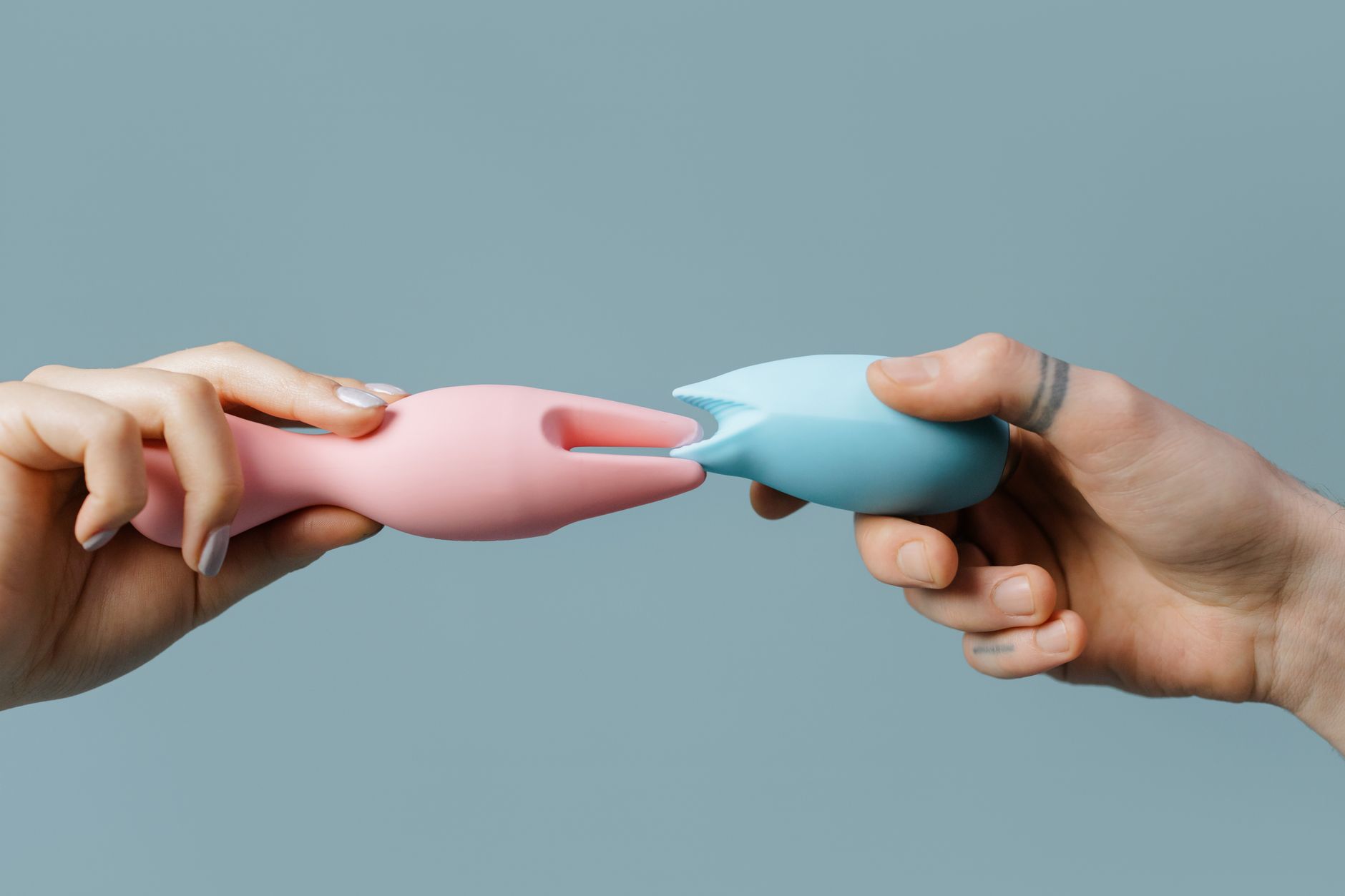
Photo by cottonbro studio on Pexels
Starting with zero expectations
Here's the anchor point: you're not trying to have an orgasm. You're not trying to figure out if you like this. You're just trying to notice what happens when you pay attention to sensation without judgment.
This changes everything.
When you pick up a lemon clitoral vibrator for the first time with the goal of "figuring out what you like," you're putting the cart before the horse. The goal isn't clarity yet. The goal is data collection. Your nervous system learns through noticing, not through forcing conclusions.
Start in a moment when you're alone, not rushed, and genuinely curious rather than goal-oriented. Not while you're watching the clock. Not while you're thinking about your to-do list. Set up in a space that feels safe, warm, and private. Light, sound, temperature all matter because they tell your nervous system it's okay to pay attention to pleasure.
Turn on the lowest setting. The Lem starts at pattern 1. Start there. Spend five minutes just noticing what it feels like against your skin, with your clothes on, without any intention of sexual arousal. Does the vibration feel tingly? Buzzy? Gentle? Weird? All of those are data. None of them are wrong.
Moving from noticing to wanting
After a few sessions of just noticing at the lowest intensity, you might realize that certain patterns feel more interesting than others. Or you might notice that sometimes it feels nice and sometimes it feels like nothing. Both are information.
Now you can start asking real questions: "What happens if I try pattern 3 instead of pattern 1?" "What if I explore this for longer than five minutes?" "What if I'm in a different emotional state than I was last time?"
This is where people often get stuck because they expect each session to build toward something. It doesn't. Some sessions will feel amazing. Some will feel neutral. Some will feel awkward or uncomfortable. That variability isn't a sign that something's wrong. It's how the nervous system actually works.
I often recommend keeping notes, honestly. Not in a clinical way, but just jotting down afterward: "Tried pattern 2 for 10 minutes. Felt tingly on the left side but nothing on the right. Not sure if that's anatomy or just how today felt." Over weeks, patterns emerge. You'll notice that you prefer certain settings, certain times of day, certain emotional contexts. That's how preference becomes clear.
The role of your body's own signals
When you're not sure what you like, you're often not paying attention to the cues your body's already giving. Arousal doesn't have to look like what you think it should. It doesn't have to build in a specific way. It doesn't have to end in a specific place.
With lemon vibrators, specifically clitoral vibrators that use suction, you might find that pleasure feels less like building intensity and more like waves or pulses. You might notice that sometimes your body responds quickly and sometimes it takes longer depending on stress levels, cycle, caffeine, sleep, or whether you're annoyed at your partner. All of that is completely normal.
Watch for small things: slight shifts in breathing, warmth, slight swelling or engorgement, the urge to move your hips or shift position. Those are your body talking. When you notice them, that's success. Not because it leads somewhere, but because you're listening.
The conversation with a partner, if there is one
If you're exploring this with a long-term partner, this becomes a different kind of conversation than "I don't know what I like." It becomes "I'm learning what I like, and I want space to explore without pressure."
That's a delicate boundary, and it matters. You're not rejecting them or suggesting something's wrong with your connection. You're saying "I need some solo time with my own body before I know how to guide you." Most good partners understand that immediately.
Once you start getting some clarity through solo exploration, you can share what you've noticed. "I found that I really like this pattern when I'm relaxed and not thinking about being watched." Or "I noticed I respond better to gentler sensation than I expected." That information becomes the actual foundation for partnered pleasure, because now it's rooted in something real you've discovered about yourself.
When you still feel stuck after trying
Sometimes you explore for weeks and still feel disconnected. That's not a sign to give up. It might be a sign that your nervous system needs something different: maybe more time between sessions, maybe partnered exploration instead of solo, maybe talking to a therapist about what pleasure symbolizes for you given your history.
Some bodies respond immediately to lemon vibrators. Some take weeks. Some people's pleasure unfolds through connection and communication rather than sensation alone. There's no wrong timeline here.
What I've learned from working with couples is that the people who eventually find clarity aren't the ones who try harder. They're the ones who let curiosity replace pressure. They're the ones who can say "I don't know yet" and actually be okay with that answer.
What you're actually building
When you spend time exploring what feels good without judgment, you're not just figuring out your preferences. You're rebuilding a relationship with your own body. You're teaching your nervous system that paying attention to sensation is safe. You're creating permission for yourself to want things and ask for them.
That's bigger than knowing whether you prefer pattern 4 or pattern 6 on a lemon clitoral vibrator. That's the foundation for real pleasure, partnered or solo, for the rest of your life.
Start small. Stay curious. Let your body show you what it actually wants instead of what you think it should want. The Lem and other lemon vibrators are just tools. You're the actual expert on your own pleasure.
Frequently asked questions
What if I don't feel anything the first time I use a lemon vibrator?
That's completely normal and doesn't mean anything's wrong with you. Your nervous system might need a few sessions to register sensation, especially if you've spent years disconnected from pleasure. Try again in a few days in a different emotional or physical state. Sometimes bodies respond better when you're less focused on the outcome.
How often should I explore with a lemon clitoral vibrator if I'm trying to figure out what I like?
There's no perfect frequency. Some people benefit from once a week. Others prefer a few times weekly. The key is consistency without pressure. If exploring starts to feel like a chore or another box to check, scale back. Curiosity works better than obligation.
Should I use lube with a lemon vibrator when I'm exploring?
It depends on your comfort. Lube isn't required for air-suction vibrators like the Lem the way it is for traditional vibrators, but some people find it adds to the sensation. Try both ways and notice what feels different. Water-based lube is your safest bet if you're using silicone toys.
What if I figure out I don't actually enjoy vibrators at all?
Then you've learned something real about yourself, and that's the entire point. Pleasure comes in many forms. Some people prefer manual stimulation, partnered touch, or different types of sensation altogether. Using a lemon vibrator isn't the only way to explore. It's just one tool.
How do I know if what I'm feeling is pleasure or just physical sensation?
That distinction is blurry, and that's okay. Pleasure isn't always an obvious, overwhelming feeling. It can be subtle. A gentle warmth. A slight sense of wanting more. A moment where you forget to think about anything else. Pay attention to whether you find yourself wanting to return to something. That wanting is usually a signal that something felt good, even if it didn't feel intense.
Can I use lemon vibrators if I've never had an orgasm?
Absolutely. Lemon vibrators are actually great for people exploring pleasure without orgasm as the goal, because air-suction technology creates sensation without the pressure of traditional vibration. The lack of orgasm pressure often makes exploration feel easier and more authentic.
The real work starts with gentleness
Finding out what you like isn't something you should have already known. It's something you learn through patient, nonjudgmental exploration. Your body has answers. It just needs permission to give them.
If you have questions about how to start exploring or what feels right for your specific situation, reach out to My Lemma Sager. We're here to help you feel confident in your own pleasure.
Sources and references
Gottman, J. M., & Silver, N. (2015). The Seven Principles for Making Marriage Work. Harmony. (Referenced for relationship communication frameworks in partnered exploration contexts.)
Taormino, T. (2018). The Ultimate Guide to Sex and Disability (3rd ed.). Cleis Press. (Consulted for accessible pleasure exploration frameworks.)
Nagoski, E. (2015). Come as You Are: The Surprising New Science That Will Transform Your Sex Life. Simon & Schuster. (Referenced for nervous system responsiveness and pleasure variability.)