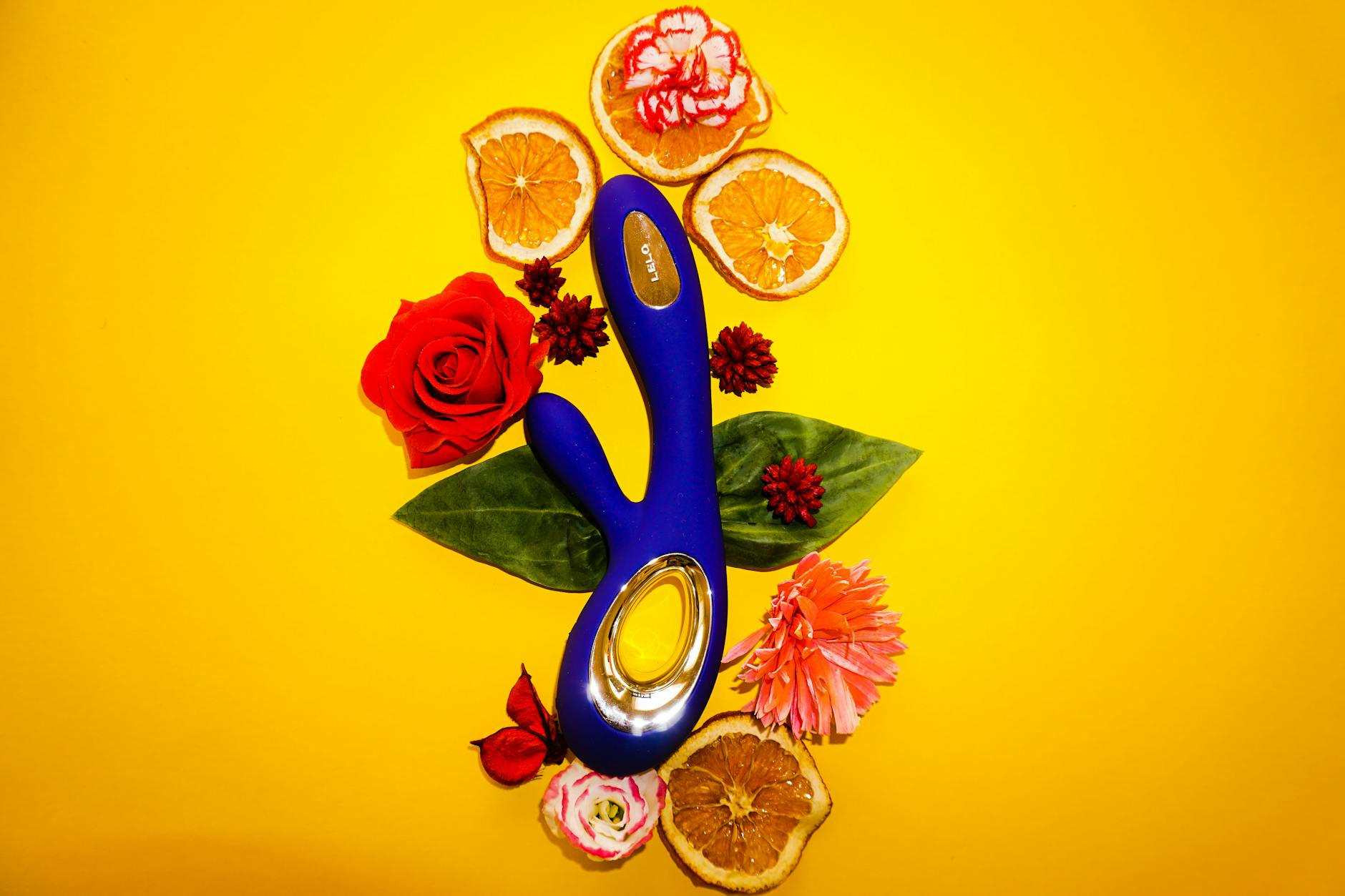
When your clitoris becomes sensitive, pleasure doesn't disappear
Sensitivity happens. Your clitoris might feel tender after intense sessions, during hormonal shifts, after extended breaks from partnered sex, or simply because your body's needs have changed. The instinct is to push through it or assume you're broken. You're neither.
What changes is how you access pleasure, not your capacity for it. And that's where lemon vibrators sit differently from traditional vibration. Instead of friction or direct pressure, they use gentle suction to stimulate the neural tissue without grinding against delicate skin.
Why lemon vibrators feel completely different
Most vibrators operate on friction. They buzz against tissue, which feels amazing until it doesn't. After a few sessions, or if your clitoris is already raw or reactive, that friction can tip from pleasurable to genuinely sore.
Lemon clitoral vibrators use air-pulse or suction technology. Here's the simplified version: they create a rhythmic pressure change around the clitoris rather than on top of it. That distinction matters wildly. The stimulation reaches the nerve endings without the mechanical wear of direct contact.
Think of it like the difference between massaging a bruise with your knuckles versus using cupped hands to create pressure waves. Same goal, completely different pathway.
The anatomy that makes this work
Your clitoris has about 8,000 nerve endings concentrated in a small area. They're not distributed evenly. Some sit closer to the surface, others deeper in the glans and shaft. When your clitoris is sensitive, the surface nerves are often overactive while deeper ones are underutilized.
Suction-based stimulation from lemon vibrators activates both layers differently. The pressure wave travels through tissue rather than sliding across it. This distributes sensation more evenly and reduces the inflammation response that comes from repeated friction.
The result is often described as "deeper" or "more rounded" pleasure. Not a single sharp point of stimulation, but a full-bodied experience that doesn't leave your clitoris sore afterward.
How to start without overdoing it
If you're new to suction-based lemon vibrators, the temptation is to go straight to the highest setting because it feels so different from what you're used to. Resist that. Your clitoris is sensitive for a reason. Respect that.
Start on the lowest setting. Spend five to ten minutes just exploring how it feels. You're not trying to orgasm. You're learning your body's response. Many people are surprised by how much sensation they feel at level one.
Once you're comfortable, move up to level two. Stay there for several sessions before progressing. This isn't about building tolerance. It's about allowing your nervous system to adjust and your clitoris to rebuild its capacity for sensation in a sustainable way.
If anything feels too intense, go back down. Sensitivity isn't a sign you should push harder. It's information. Listen to it.
Lube, positioning, and timing matter more than you think
Water-based lubricant is your friend, even though lemon vibrators don't create the friction that traditionally requires it. A small amount of lube helps the air seal properly against your skin, which actually makes the sensation cleaner and more defined.
Positioning changes everything. Lying on your back allows gravity to relax your pelvic floor naturally, which reduces tension in the very muscles that can make sensitivity worse. If you usually masturbate standing up or sitting, try lying down for a few sessions. The change in muscle engagement alone shifts how sensation feels.
Timing matters too. Your clitoris is more sensitive at different points in your cycle. If you menstruate, you might notice that right before your period feels rawer than mid-cycle. Plan your exploration for phases when your body feels more receptive.
Building arousal without friction
One of the unexpected gifts of switching to lemon vibrators when you're sensitive is that it forces you to slow down. Arousal becomes less about "get there fast" and more about staying in the experience.
Spend time on non-clitoral touch first. Your inner thighs, your breasts, your lower belly. Everything around the clitoris. This distributes blood flow and prepares your nervous system for more direct stimulation without dumping all the sensation load on one tiny area.
With a lemon vibrator, arousal often builds in waves rather than a single arc upward. That feels strange at first if you're used to linear escalation. Lean into it. Those waves are actually your body integrating sensation more deeply.
Many people find that orgasms from suction-based stimulation feel different too. Not weaker, just less peaked. More of a rolling release than a sharp peak and crash. Some describe it as multiple small waves rather than one big one. This is normal and, honestly, often more satisfying.
When sensitivity is protective information
Here's the thing nobody tells you: sometimes clitoral sensitivity is your body saying something needs attention. If you've been pushing through pain or numbness for years, sensitivity might mean healing is actually happening.
But sometimes sensitivity signals something that needs professional support. If your clitoris is sore constantly, not just after sex. If touching it causes sharp pain. If you've developed new sensitivity after a procedure or a medical change. Talk to a doctor who specializes in sexual health. Genitourinary issues are real and treatable.
A lemon vibrator isn't a workaround for pain. It's a tool for when your clitoris needs gentler access to pleasure while it heals or recalibrates. The two aren't mutually exclusive.
The patience piece
Rebuilding sensation and pleasure after sensitivity sets in takes time. Not because you're broken, but because your nervous system has learned a pattern of defense, and you're teaching it something different.
You're essentially saying: This area is safe to feel good again. Your body needs multiple experiences of that message before it fully integrates the new information.
Some people see dramatic shifts in two weeks. Others need two months. Both are completely normal. The goal isn't to rush back to where you were. It's to find a new baseline that feels sustainable for your body right now.
Lemon vibrators, with their gentler suction-based approach, make that conversation between you and your body a lot quieter and a lot more honest. You're not fighting sensation. You're dialoguing with it.
FAQ
Can I use a lemon vibrator if my clitoris is still painful?
Depends on the pain. If it's raw or tender after previous stimulation, a lemon vibrator at the lowest setting can actually help because it doesn't add friction. If it's constant sharp pain that exists independent of touch, see a healthcare provider first. There might be something like a cyst, chronic irritation, or vestibulodynia that needs professional attention before any toy use.
How long does it take to feel comfortable with gentler stimulation?
Most people feel noticeable improvement in two to four weeks of consistent, patient use. Your clitoris isn't learning a new sensation, but your nervous system is learning that gentler stimulation is enough. That rewiring takes time, but it usually happens faster than you'd expect.
Should I use lemon vibrators instead of my old vibrator, or alongside it?
Totally up to you. Some people find that switching entirely to suction-based lemon vibrators gives their clitoris a chance to fully heal. Others use them on sensitive days and return to traditional vibrators once their clitoris feels more resilient. Listen to your body. It'll tell you which approach feels right.
What if I orgasm quickly with a lemon vibrator?
Quicker orgasms often mean your body is responding well to the stimulation. That's not a problem. If you want to extend the experience, you can ease off before climax, let arousal settle, and build again. Lemon vibrators make this really easy because the sensation isn't relentless. You have actual control over the intensity and duration.
Can my partner use a lemon vibrator on me if I have sensitivity?
Absolutely, and sometimes it's actually easier. A partner can pay attention to your body's real-time responses and adjust speed or pressure instantly. That responsiveness is helpful when you're rebuilding trust in sensation. Just make sure your partner understands the goal isn't to push you toward orgasm, but to explore what feels good at each moment.
Is clitoral sensitivity permanent?
No. Most sensitivity resolves with time, patience, and appropriate technique. Some people need additional support like topical treatments or physical therapy if pelvic floor tension is involved. But sensitivity isn't a permanent loss of pleasure. It's usually a temporary recalibration.
You deserve pleasure that doesn't hurt
Clitoral sensitivity changes the conversation you have with your body, but it doesn't end it. It just asks you to listen more carefully. Lemon vibrators, with their gentle suction-based approach, make that listening easier.
Your clitoris isn't broken. It's not being punished. It's asking you to slow down, to be gentler, and to trust that pleasure is still waiting on the other side of patience. That's worth honoring. If you're ready to explore what that might feel like, we're here to help. Reach out at our contact page or browse our collection of clitoral vibrators designed with sensitivity in mind.