Here's what birth control actually does to your body
Let's be real. Nobody tells you that swallowing a pill for 28 days might change the way your clitoris feels during sex. But it does. Birth control alters hormone levels in ways that ripple through arousal, lubrication, orgasm intensity, and even genital sensation itself. And if you've been on the same method for years, you might not even realize the shift happened until you stop and suddenly remember what normal felt like.
The frustrating part? Most of the research on birth control focuses on preventing pregnancy, not on what happens to pleasure. That gap leaves a lot of people confused, thinking something's wrong with them when actually something's just different.
The physiology behind the change
Hormonal birth control works by suppressing your natural estrogen and progesterone cycles. That's the point. But those hormones don't just control ovulation. They regulate blood flow to the clitoris, the thickness and sensitivity of vulvar tissue, and how quickly your nervous system responds to touch.
Here's what happens clinically.
Estrogen drops on birth control, which can mean less engorgement of the clitoris during arousal. Your clitoris might feel less pronounced, less responsive to direct touch. The vaginal tissue becomes thinner and potentially more fragile. Some people report their clitoris feels almost numb during the pill's active weeks, like the sensation is muted behind glass.
Progestin (the synthetic progesterone in birth control) can also dampen dopamine and testosterone, both of which drive desire. So you might notice not just that sensation feels different, but that you're less interested in sex altogether.
The added layer: if you're on a birth control method that suppresses your cycle completely (like continuous-use pills or an implant), you never get the hormone surge that comes before ovulation. That surge is usually when sexual appetite peaks. Without it, arousal can feel like you're trying to start a car that won't turn over.
Why lemon clitoral vibrators work differently when you're on hormones
Traditional vibrators rely on direct mechanical vibration. They work fine most of the time, but when your clitoris is less engorged or sensation is muted by hormonal suppression, you end up chasing intensity. You turn it up higher, press harder, and end up fatiguing the tissue rather than arousing it.
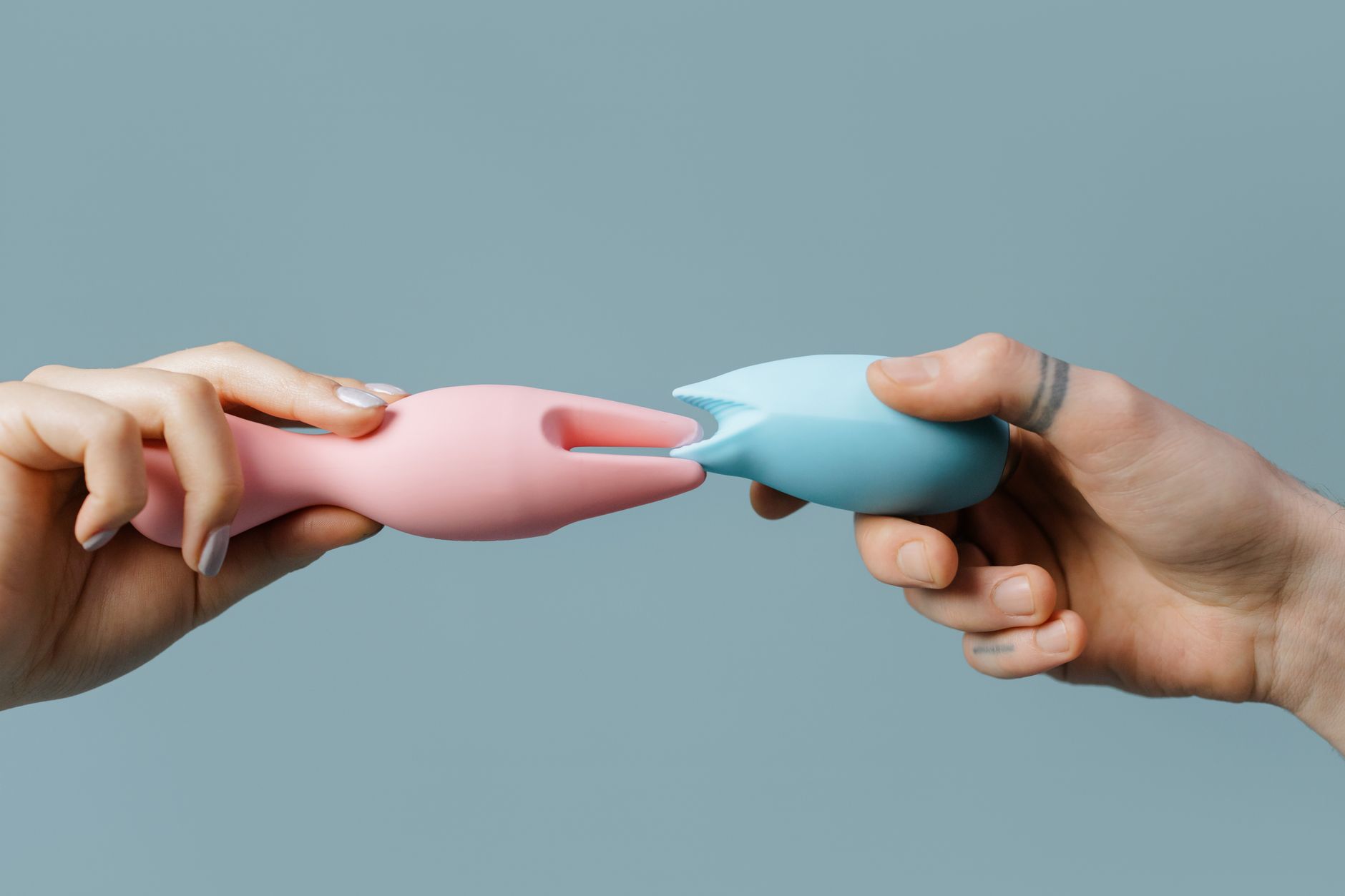
Lemon vibrators work through air suction, which is fundamentally different. Instead of friction, they create a gentle vacuum that draws blood into the clitoris and stimulates the surrounding nerve network without requiring the tissue to be already sensitive. This matters massively when birth control has dampened sensation.
The suction mechanism essentially wakes up your clitoris. It pulls blood into the tissue, increases engorgement, and activates sensation from the inside out. That means you're not fighting against hormonal numbness. You're working with your body's actual physiology.
People often describe the sensation as less buzzy and more like a gentle pulling or pulsing. That's the suction at work. It's particularly helpful during that flat phase of hormonal birth control when your clitoris feels disengaged.
Adjusting your approach when sensation is muted
If you're on birth control and sensation feels noticeably different, four things shift the experience.
Start with time, not intensity. When arousal is slower to build, most people reach for a higher setting on a vibrator. Don't. Instead, budget 20-30 minutes for foreplay and start on the lowest suction setting on your lemon vibrator. Let the vacuum do the work of bringing blood into the tissue. Your clitoris will respond better to gentle consistent suction than to maximum intensity from the start.
Use lubrication strategically. Birth control can reduce natural lubrication, yes. But the real issue is that thinner tissue during arousal phase becomes irritated more easily. A water-based lubricant helps, but also pay attention to where you apply it. Lube on the opening of your clitoris changes how suction feels. Some people prefer a tiny amount. Others prefer none until the tissue is already engorged. Experiment.
Layer sensation, don't chase it. Your arousal on birth control might look different. Instead of a fast climb to intense orgasm, you might experience a slower build with plateaus. That's normal. During those plateaus, switch between methods. Use the lemon vibrator for 5-10 minutes, then pause. Use a partner's touch. Then return to the lemon. Variety actually helps your nervous system engage when hormones are suppressing it.
Map the timing to your pill pack. If you're on a traditional 21/7 pill pack, sensation often feels better during the hormone-free week. If you have access to know this, it's worth scheduling solo or partnered sex with more intention during that window. Or, conversely, if you know that week-three pill days are your worst sensation days, don't schedule important sex then. Work with your cycle instead of against it.
When birth control side effects are worth discussing with a doctor
Some sensation changes are just adaptation. Some are signs you need a different method.
If your desire has completely flatlined and hasn't improved with time or technique, ask your doctor about switching. Different formulations have different hormone levels. A lower-dose pill, or a different type of progestin, sometimes makes a meaningful difference. It's not failure to switch. It's information.
Similarly, if sensation has become actually painful rather than just muted, get checked. Birth control can contribute to vulvodynia or other pain conditions in some people. A gynecologist trained in this area can tell you whether what you're experiencing is typical adaptation or something that needs treatment.
Also worth mentioning to your doctor: desire loss combined with mood changes, fatigue, or depression. Birth control works differently for different bodies. If it's not working for yours beyond just sensation changes, you have options.
The conversation with a partner when things feel different
If you've been with a partner for years and suddenly you're on birth control that changes how you respond, they might interpret the shift as loss of interest in them. That's the dangerous assumption to avoid.
The most helpful conversation separates the two topics entirely. "My body feels different during sex right now because of my birth control" is completely separate from "I want us to reconnect physically." The first is anatomy. The second is relationship work. Confusing them turns both into dead ends.
If your partner is willing, they can help you explore what works now. Lemon clitoral vibrators are particularly good for partnered sessions because the suction sensation is visible and interesting to watch. It's not a replacement for partnership. It's a tool that helps you both understand what sensation currently works.
The long view
Birth control changes sensation temporarily, not permanently. If you switch methods or stop taking it, sensation usually returns within 2-4 cycles. That's useful to know. It means you're not broken. Your body is responding normally to a hormonal shift.
In the meantime, lemon adult toys like the lem vibrator give you a way to work with how your body actually functions right now, not how you wish it would function. That's not settling. That's meeting yourself where you are.
Your pleasure matters enough to adjust for. Use that as your baseline.
Questions people actually ask
How long does it take for birth control to affect sensation?
Most people notice changes within 1-3 months of starting birth control, though some notice shifts within weeks. If you've been on the same method for years and suddenly sensation feels different, it might be unrelated to the birth control itself. Other factors like stress, relationship changes, or age can shift sensation too. That said, if the change coincides with starting a new pill or switching formulations, birth control is likely the culprit.
Can you use a lemon vibrator safely while on birth control?
Absolutely. Birth control doesn't change how your clitoris responds to suction or vibration. It just changes the baseline sensitivity. A lemon clitoral vibrator is actually a smart choice because suction-based stimulation often works better than traditional vibration when sensation is muted by hormones. Clean your toy before and after use like always, use appropriate lubricant, and you're fine.
Will switching birth control methods help sensation return faster?
It depends on why sensation changed. If it's purely hormonal suppression from the current method, switching to a lower-dose formulation or non-hormonal method (like copper IUD) can help. But it takes 1-3 cycles to notice improvement. If sensation changes are stress-related or linked to relationship issues, switching methods won't solve it. A gynecologist can help you figure out if the method itself is the issue.
Is it normal to lose orgasm ability on birth control?
You don't lose the ability. But orgasms might feel weaker, take longer to reach, or require different stimulation. That's normal. Some people's bodies adapt after a few months. Others find that certain types of birth control work better for their pleasure than others. If you've been on the same method for years with no orgasms, it's worth discussing with your doctor whether a different formulation might help.
Can lemon sexual toys fix birth control-related numbness?
They can help manage it. A lemon sucker like the lem vibrator draws blood into the clitoris and activates sensation in ways that flat vibration doesn't. That often makes orgasm more achievable and more intense. But they're a tool, not a cure. If sensation loss is severe or distressing, talk to your doctor about whether your current birth control is the right fit.
What should I do if sensation never returns after stopping birth control?
It usually does, but not always instantly. Give it 3-4 months. If sensation still feels muted after that, other factors might be at play. Stress, medications, relationship issues, or pelvic floor tension can all flatten sensation. A pelvic floor physical therapist or sex therapist can help you identify what's happening and what actually helps.
The starting point
Birth control changes how your body feels during sex. That's not a bug. It's a side effect you can work around. <a href="/blog/how-to-use-lemon-vibrators-when-your-clitoris-needs-gentler-stimulation">Gentler stimulation like air suction</a> often works better when sensation is dampened, which is why lemon vibrators are such a good fit during these phases. And <a href="/blog/how-to-use-lemon-vibrators-when-you-feel-disconnected-from-your-body">reconnecting with your body after sensation loss</a> is usually a matter of using the right tools and giving yourself patience.