The resistance you're feeling is real
You've been thinking about trying a lemon vibrator. Maybe you saw one online, maybe a friend mentioned it, maybe you've just been curious about what the fuss is about. But your partner hasn't said anything explicitly negative, and that silence feels like a wall. So you haven't brought it up. And now you're stuck in that familiar loop: the longer you wait, the weirder it seems to mention.
Let me tell you what I see in my practice. The partner resistance to toys isn't usually about the toy itself.
What your partner is probably actually worried about
After working with hundreds of couples, I've narrowed down the real fears. They almost never say this out loud, which is why they sound like "I don't know, toys just feel weird" when what they actually mean is one of these four things.
1. Am I not enough? This is the big one. If you need or want a lemon clitoral vibrator, does that mean I'm failing you sexually? The toy feels like evidence of inadequacy, even though logically he or she might know that's not how pleasure works.
2. Is this about someone else? Did you see this on another partner's social media? Are we comparing ourselves to some standard from porn? Toys sometimes trigger comparison anxiety, even when there's no actual rival.
3. Will sex change? Will you want toys every time now? Will I have to become someone I'm not? Will this become a thing I have to perform alongside, like I wasn't already doing enough?
4. Does this mean we're broken? Healthy couples don't need props, right? Wrong. But that cultural myth lives rent-free in a lot of people's heads.
None of these are actually about the lemon vibrator. They're about insecurity, identity, and the gap between what your partner thinks good sex should look like and what good sex actually is.
The frame that works
You don't start by talking about the toy. You start by talking about pleasure.
Say something like: "I've been thinking about what I want to explore more, sexually. And I realized I'd like to try something that might feel amazing for both of us. I found something I'm curious about."
That opener does three things. It centers your own desire (not a complaint about them). It frames this as exploration, not emergency maintenance. And it signals that you're thinking of both of you, not just yourself.
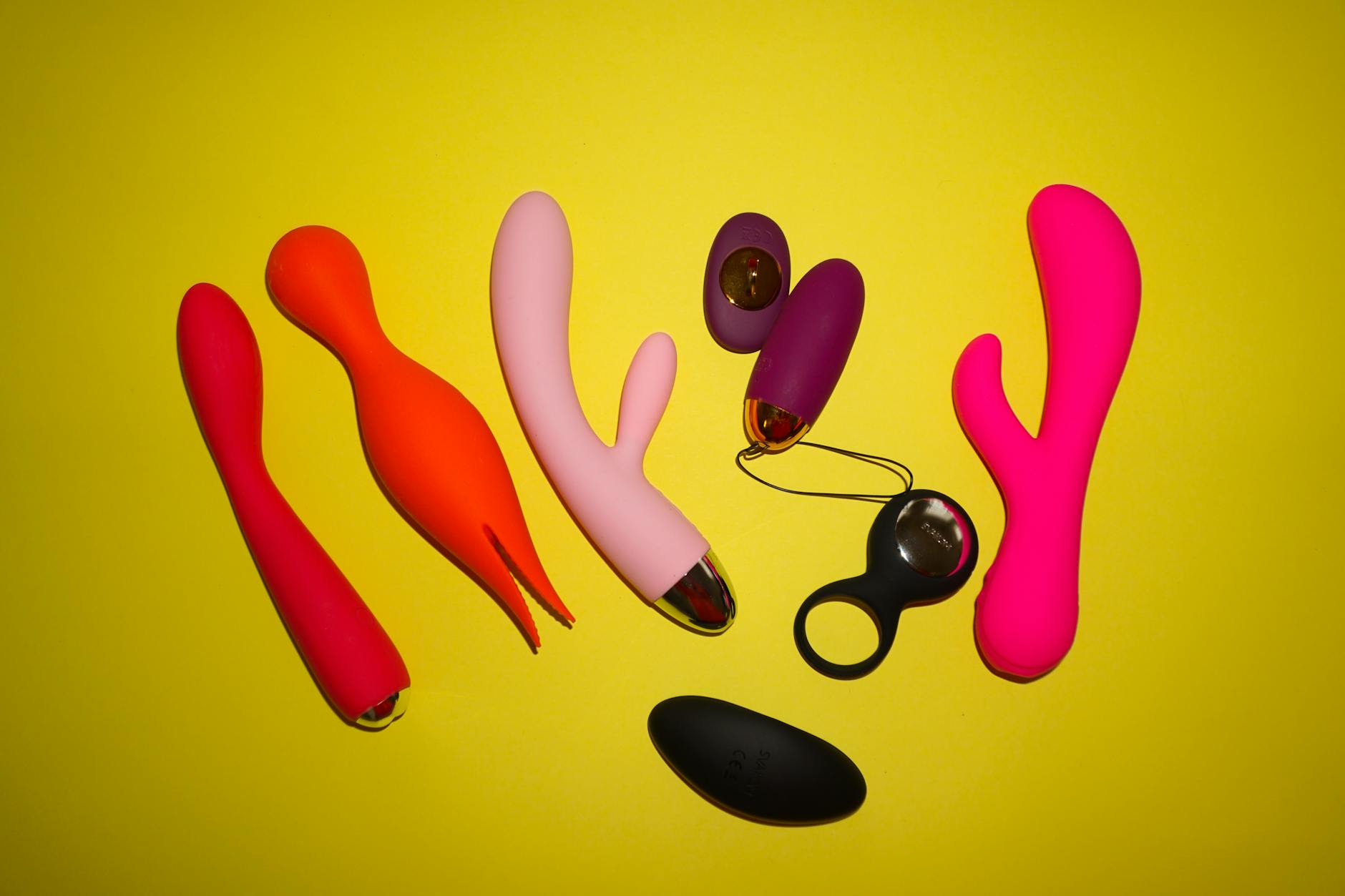
Then you show them what it is. Actually show them. Let them hold it. This sounds silly, but the moment someone touches a lemon clitoral vibrator, the weird factor drops by about 70%. It's small, pretty, often playful. It's not intimidating when it's in your hand.
What to say next
Here's where you reframe it: "I'm not looking for this to replace anything. I'm looking for this to feel better. A clitoral vibrator is just a more efficient way for me to have an orgasm. Like, you know how a shower head feels better than a cup of water? Same idea. Same body, same person you're attracted to. Different tool."
That metaphor works because it's true and because it doesn't insult your partner's effort. You're not saying "you're bad at this." You're saying "my body responds well to this specific stimulation."
If your partner is still hesitant, you might add: "I'd like to try this with you in the room. Not instead of you. With you. That way you see what it actually does, and you're part of it. We're not replacing anything. We're adding."
Most partners, when they see lemon vibrators in action, get curious. They realize it's not a threat. They often realize it might unlock something that's been hard to access.
The logistics of the first time
Plan for this like you'd plan for anything else new. Pick a time when you're both relaxed and you have space. Don't do this at the end of a long day or right before you're supposed to go to sleep. You want actual presence from both of you.
Start with foreplay you already do. Build arousal the way you normally would. Then introduce the lemon vibrator the way you'd introduce a hand. Slowly. No apologies. Just "Let me try this."
What often happens is your partner gets to watch you have a really strong orgasm. And that actually reframes everything. It's not a replacement. It's an amplification. You're more relaxed, more present, able to let go more fully. That's actually hot to a partner, once the worry clears.
When to upgrade the conversation
After the first time, especially if it went well, you might say: "That actually felt amazing. Can we make this part of what we do?" Not every time. Just when it feels right.
Here's what I tell couples: every relationship is negotiating new territory all the time. You want different positions, different locations, different speeds, different rhythms. A lemon clitoral vibrator is just another variable. It's not special. It's just new.
If your partner stays resistant after you've introduced it and explained the actual mechanics, then you have a different conversation. You'd say something like: "I notice you're still uncomfortable with this. Can we talk about what's actually worrying you?" And then you listen. You're not trying to convince them. You're trying to understand what the real fear is beneath the surface.
Sometimes it's something you can address. Sometimes it's a deeper insecurity that needs more support. But at least you're talking about the actual problem instead of circling around the toy.
A note on pressure
You can't make your partner comfortable with this. You can only present it clearly and give them space to adjust. Some partners come around in five minutes. Some take months. Some never do, and that's information too.
What I've seen work is consistency plus no pressure. You bring it up once. You show them. You explain the logic. Then you let it sit. Don't bring it up again for a while. Let them process. Often the resistance fades when it's not being pushed.
And if you end up using a lemon vibrator solo, that's fine too. That's not a failure of the conversation. That's you honoring your own pleasure regardless of someone else's timeline.
The thing nobody says
Here's what actually changes when you introduce toys into a relationship: you stop pretending sex is one thing and start letting it be many things. That's uncomfortable for people who've been sold the myth that real intimacy requires nothing but each other.
But real intimacy is showing up as you actually are. If that includes wanting to explore lemon clitoral vibrators, and your partner can be in the room with that without falling apart, you're actually closer. Not further apart.
The conversation you're dreading usually takes eight minutes. The shift that follows can change everything.