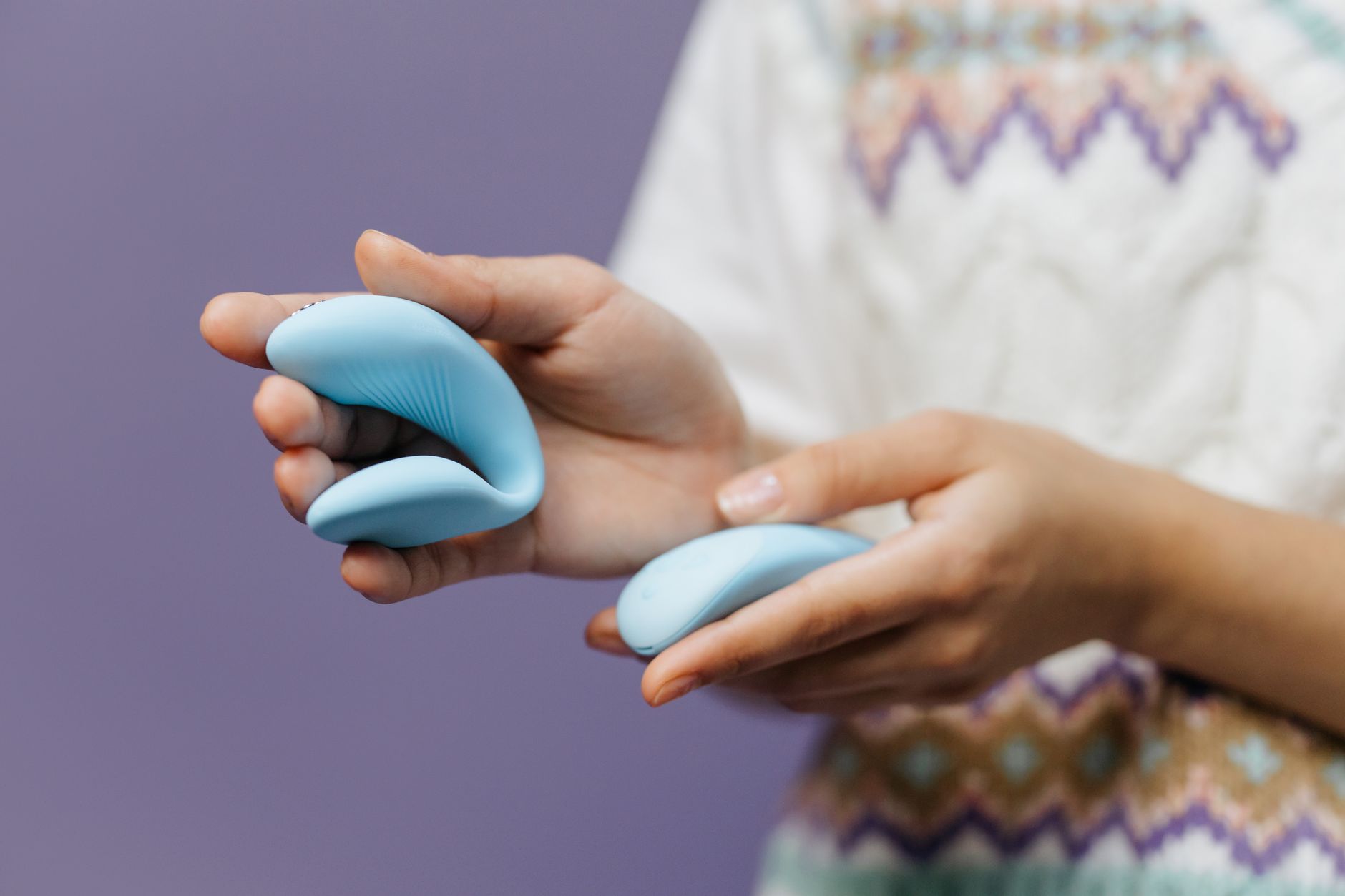
When arousal hurts, most people stop trying
Let's be real. Pain during sex or self-pleasure is the fastest way to kill desire. Your body learns the pattern fast: arousal means discomfort, so arousal gets avoided. That teaches your nervous system to clamp down before stimulation even starts. Then you're stuck in a loop where the anticipation of pain prevents the arousal that might actually help.
Here's the thing though: pain during arousal is often a friction problem, not a pleasure problem. And friction problems have actual solutions.
What actually causes pain during arousal
Three main culprits show up again and again.
First, there's mechanical friction. Traditional vibrators work through rapid vibration plus direct contact. If your tissue is sensitive, dry, or thin, that combination creates pressure and heat that can feel sharp or burning rather than good. It's not your clitoris failing you. It's the tool working against your anatomy.
Second, anticipatory tension. Once you've experienced pain during arousal, your pelvic floor starts tensing the moment things get intimate. Tight muscles mean less blood flow, which means less natural lubrication, which means more friction. The pain creates the condition for more pain. It's a physical catch-22.
Third, sensitivity that hasn't been properly built back up. If you've been avoiding stimulation for weeks or months because of discomfort, your tissues actually need a gentle reintroduction. Jumping back into intense stimulation isn't bravery. It's a recipe for re-triggering the same pain response.
Why lemon vibrators are different
Lemon clitoral vibrators like the Lem use suction and gentle pulsing instead of aggressive vibration. That changes everything about how the stimulation feels and how your tissue responds.
With suction, you get sensation without the same mechanical friction. The technology creates a seal around the clitoral area and pulses in waves rather than buzzing at a single frequency. For people managing pain, this matters because suction distributes sensation across a broader area, so no single point bears all the pressure.
You're also in control of intensity in a totally different way. With a traditional vibrator, you're basically choosing between "on" and "off." With a lemon sucker vibrator, you can start at sensation levels 1 or 2 and spend real time there before building up. Most people with pain responses need that gradual ramp. They need to prove to their nervous system that arousal can feel good first.
How to use a lemon vibrator when arousal hurts
Start low. Not medium-low. Low.
The Lem has multiple pulsing patterns starting at intensity 1. Spend 10-15 minutes at that level. Your job is not to chase an orgasm. Your job is to prove that this doesn't hurt. That's the whole conversation.
Use lubricant anyway, even though suction doesn't technically require it the way friction-based vibrators do. A water-based lube around the area creates a smoother seal and makes the sensation feel richer without adding pressure. It's a signal to your body that you're being gentle with yourself.
Watch for tension in your thighs, lower belly, and jaw. Pain anticipation lives there. If you notice tightness, pause. Breathe into your belly for a minute. Then restart at the same intensity level. You're teaching your nervous system that this is safe.
Incorporate more feeling time than stimulation time. After 10 minutes at level 1, turn it off and just touch the area gently with your fingers. Notice what sensations are there without trying to build them into anything. This is called somatic awareness, and it's how you rebuild a healthy relationship with your own body.
The timeline nobody talks about
If you've been managing pain during arousal for more than a few months, rebuilding usually takes 2-4 weeks of consistent, low-pressure engagement. That's not a bug. That's how nervous systems actually work.
Week one, you're proving it doesn't hurt. By week two, you might start feeling a shimmer of actual pleasure under the relief. Week three is when the shame of avoidance usually lifts a little. By week four, most people report that arousal feels different in their body. Not fixed. Different. Gentler. More voluntary.
This timeline assumes you're actually using the tool consistently. Once a week isn't enough information for your nervous system to update its threat model. Every other day or daily is what builds a new pattern.
When to involve a partner
If you have a partner and you're managing pain during intimacy together, the most helpful thing you can do first is explore sensation alone. Not to deny your partner access, but to gather data about what actually feels good versus what you think you should tolerate.
Once you've spent a few weeks rebuilding that connection on your own with a lemon vibrator, you've got real information to share. "I discovered that intensity level 2 feels amazing and level 5 triggers pain" is a conversation starter. "I think I have an issue" stays abstract.
Involving a partner too early often means their anxiety about your pain becomes part of the dynamic, and that makes everything harder.
When something else is going on
If you're using a suction vibrator correctly, starting at low intensities, using lubricant, and pacing yourself over weeks, and the pain either stays the same or gets worse, that's information. That's not failure. That's your body saying the issue runs deeper.
Pain during arousal can signal vaginismus (involuntary pelvic floor clenching), vulvodynia (chronic pain in the vulval tissue), or other physical conditions that genuinely benefit from seeing a pelvic floor physical therapist or a gynecologist trained in sexual medicine. That's not embarrassing. It's exactly what those specialists are there for.
The Lem and other lemon clitoral vibrators can be part of that journey, especially once you've got professional guidance. But they're not a replacement for medical evaluation if something feels seriously wrong.
The shift that happens
Most people come to lemon vibrators because something else wasn't working. But somewhere around week three of gentle, consistent use, the narrative changes. It stops being "I'm trying to fix myself" and starts being "I actually enjoy this."
That shift is the goal. Not orgasms. Not performance. Just the quiet fact that your body can feel good, and you don't have to brace yourself to find out.
People also ask
Can you use a lemon vibrator if you have vulvodynia?
Yes, but with particular care. Vulvodynia means the tissue is genuinely hypersensitive, so starting at the absolute lowest intensity is critical. Many people with vulvodynia find that suction-based stimulation feels better than vibration because it doesn't create the same direct pressure. That said, if you have diagnosed vulvodynia, check with your pelvic floor therapist or gynecologist before introducing any new tool. They might suggest starting with external contact only before moving to suction, or they might recommend a specific timing within your pain cycle.