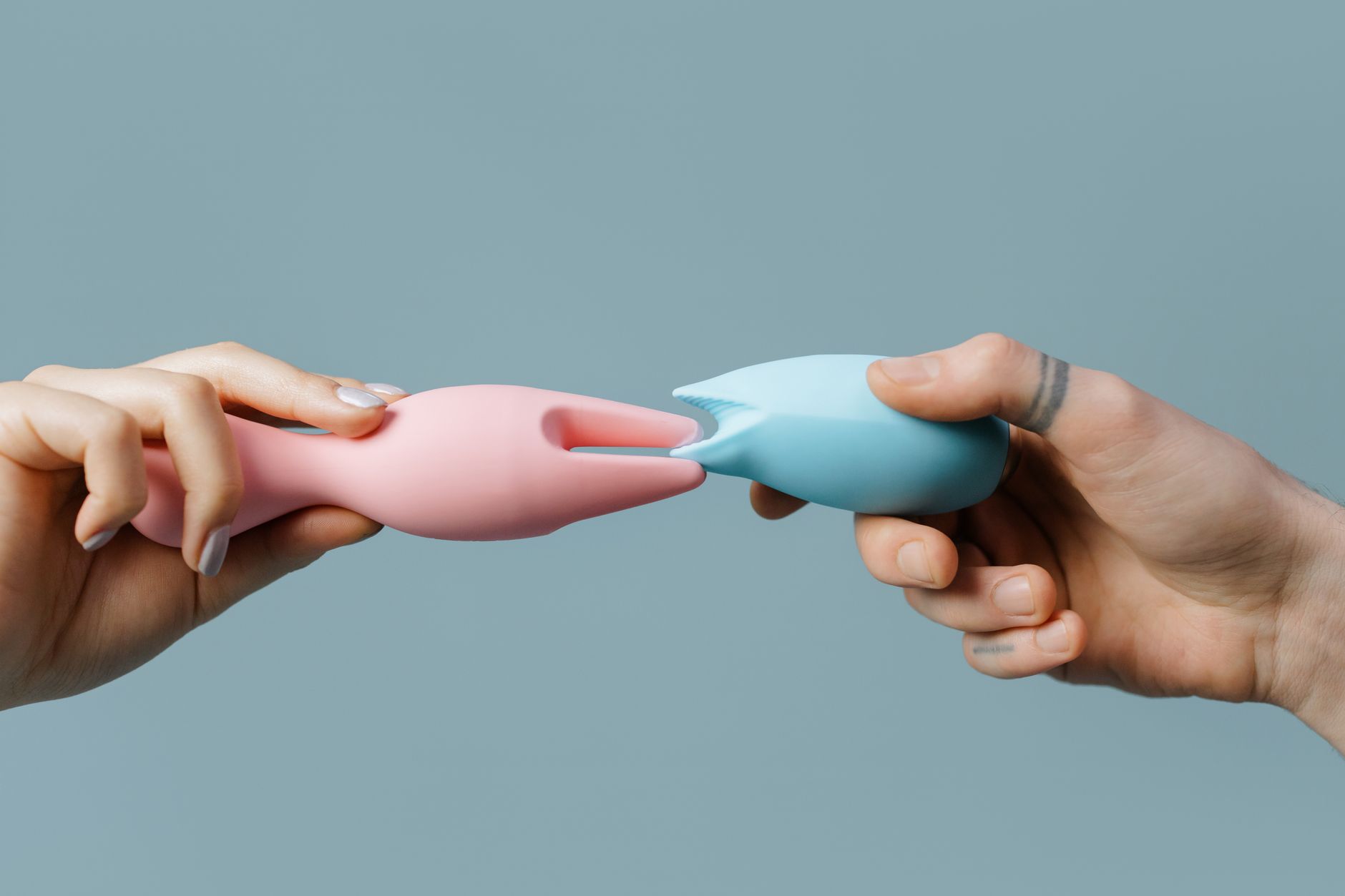
Let's talk about the drift
You've been together for years. You still love each other. But somewhere between work stress, parenting, bill payments, and just existing in the same house, sex stopped being something you did together and became something you stopped doing at all. Maybe it's been months. Maybe longer. And now the idea of restarting feels impossible because you don't even know where to begin.
Here's the thing nobody tells you: the problem isn't that you're broken. The problem is that you've forgotten how to look at each other while something pleasurable is happening.
Why couples stop having sex (and it's not what you think)
Research consistently shows that long-term couples don't stop having sex because they stop loving each other. They stop because the pathway has become so fraught with performance anxiety, resentment, and logistics that sex itself feels like a chore. One partner initiates, the other declines. After enough rejections, initiating stops altogether. The longer the gap, the harder it feels to cross.
What's actually happening is this: you've lost the practice. Your nervous systems have gotten used to not being vulnerable together. And vulnerability is what sex actually is, even when people pretend it's about technique or attraction.
Lemon vibrators, specifically, sidestep the biggest barrier couples face when rebuilding intimacy: the performance trap. Because suction-based stimulation works neurologically differently than traditional vibration, the experience feels unfamiliar enough that neither partner is carrying old scripts into the moment.
The neuroscience of rebuilding pleasure together
When you and your partner have been sexually disconnected, your brains have learned a particular pathway: sex equals pressure, rejection, shame. Trying the exact same thing (intercourse, the same positions, the same timing) activates all those old neural patterns instantly.
Introducing something genuinely new, like a lemon clitoral vibrator, actually interrupts that loop. It's new enough that it doesn't trigger the old story. And crucially, it shifts the focus from penetrative sex (which often carries the most performance pressure) to clitoral pleasure, which many people have been told to feel guilty about or hide during partnered sex.
When you introduce a lemon vibrator, you're not saying "we need to fix sex." You're saying "let's explore something together that neither of us has experienced before."
How to actually start the conversation
Don't lead with the toy. That's the mistake most couples make. You mention a vibrator and suddenly your partner thinks you're criticizing them, or that you're bored, or that they're not enough. All true stories they've maybe been telling themselves already.
Instead, start here: "I miss being close to you. I miss feeling you enjoy something." That's not about the tool. That's about wanting to rebuild something that matters.
Then: "I've been reading about how some couples use toys to reconnect. I think I'd like to try it. Would you be willing to explore that together?"
Notice what you're not saying. You're not saying "we need this" or "our sex life is broken." You're saying "I want us." The lemon vibrator becomes the means, not the message.
If your partner resists, that's information. It usually means they're anxious about what it signals, not that they don't want connection. Separate the two conversations. Talk about what the anxiety actually is (am I not enough? Does this mean you don't want me?) before you bring the toy into the bedroom.
What actually happens the first time
You'll probably be nervous. Both of you. That's normal and almost universally true. Here's what helps:
Set a low bar for success. Success is not an orgasm. Success is not perfect arousal. Success is you both being in the same room with the intention to feel good together. That's it.
Start with your partner exploring what the lemon vibrator does on their own first, without pressure. Let them get curious about the suction patterns, the settings, where it feels good. Remove the observation element temporarily. Just let them meet the toy alone.
When you come together, start clothed. Yes, really. There's less nakedness anxiety that way. Let your partner hold the vibrator. Let them explore their own body while you're present. This isn't about performing for you. It's about them remembering what their body feels like when it's being prioritized.
If they're comfortable, you can use it together. But the point isn't to create a porn-script moment. The point is to be in the room together, both focused on pleasure, both allowed to feel good without pressure.
Why lemon vibrators specifically rebuild intimacy better
Lemon clitoral vibrators work through suction, not friction. That means they don't require the same kind of positioning, pressure monitoring, or manual dexterity that traditional vibrators demand. Less skill required equals less performance anxiety.
They also create a totally different sensation than anything most couples have experienced before. That newness matters. It means you're not comparing this moment to all the other moments you've had together. You're creating something new.
And they're quieter than wand vibrators, which matters psychologically. That hum in the background carries shame for a lot of couples, especially if you've been avoiding sex altogether. The relative silence of a lemon vibrator feels less clinical and more intimate.
The emotional part (which is actually the whole point)
Rebuildling intimacy after years of drift isn't really about the toy. It's about being willing to be vulnerable again. It's about saying "I still want to feel close to you." It's about allowing yourself to be selfish about pleasure for once, without guilt.
For the partner watching, it's about shifting your role from performer to witness. You get to watch your partner feel good. You get to be responsible for nothing except being present. That's actually incredibly intimate if you let it be.
Most couples who rebuild connection through shared exploration report that sex afterward feels different. Not necessarily more frequent, but more intentional. More connected. Because you've proven to each other that you're still willing to try.
When to bring it in and when to wait
If you and your partner are actively fighting or in a period of real relational distance, this isn't the time. A lemon vibrator won't fix relationship conflict. It'll just feel like a bandaid.
But if you love each other and you've just drifted, if you want to reconnect but don't know how, if you're both willing but stuck in old patterns, then yes. The time is now. Not someday when things are perfect. Now, when you're ready to try something different.
The simplest way to rebuild connection isn't through grand gestures. It's through small acts of intentionality. Choosing to be vulnerable together. Choosing to try something unfamiliar. Choosing to prioritize each other's pleasure.
A lemon vibrator is just the vehicle. The real work is deciding that being close to your partner still matters.
People also ask
Will using a toy with my partner make them feel inadequate?
Possibly, if you introduce it badly. Which is why the conversation is everything. If you frame it as "I want to explore pleasure with you" rather than "I need this to finish," it lands differently. Many partners actually feel relief when a toy enters the picture, because suddenly there's no pressure on them to be the only source of pleasure. The toy isn't a replacement. It's a catalyst.
Should I use the lemon vibrator during intercourse or separately?
Start separately. Let your partner get comfortable with the sensation on its own. Once you're both familiar with it, you can experiment with bringing it into partnered sex. Many couples find that using a lemon vibrator during foreplay or alongside intercourse extends arousal and makes orgasm more likely. But the first few times, keep it simple and distinct.
How do I explain that I want to try this without making it sound like our sex life is broken?
Don't. Don't explain or justify it. Just say: "I found this and I think it could be fun for us to explore together." If your partner asks why, the honest answer is "I want to feel close to you in a way we haven't tried before." That's the only explanation you need. It's not an indictment. It's an invitation.
What if my partner is interested but I'm nervous about being watched?
Don't be watched the first time. Or the second. Use the toy on your own while your partner is present but not observing intensely. Read beside them. Let them be in the room without performing for them. Comfort grows slowly. You can progress to more direct observation once you've remembered what pleasure feels like.
Can a lemon vibrator actually help if we haven't had sex in years?
It can help you restart the conversation. It can interrupt old neural patterns. It can make pleasure feel like something new instead of something failed. But the actual rebuilding happens in the vulnerability. The toy just gives you permission to try. Read our guide on <a href="/blog/how-lemon-vibrators-help-when-youre-reconnecting-with-pleasure-after-years-of-routine">reconnecting with pleasure after years of routine</a> for more context on that process.
How do I know if my partner is actually enjoying it or just going along with it?
You ask. Out loud, after the moment has passed. "That felt good to me. What did you feel?" Their answer might be "I'm not sure yet" or "I need to try that again." Those are honest answers. What you're listening for is curiosity, not enthusiasm. Curiosity means they're willing to keep exploring. That's the whole point.
The real work is showing up
Lemon vibrators help couples rebuild because they make pleasure feel safer, less pressured, and more mutual. But the actual reconnection happens because you both decided it mattered enough to try something uncomfortable.
If you're at a place where you want to rebuild connection with your partner but don't know where to start, a new experience like exploring lemon clitoral vibrators can genuinely help. But the tool isn't the fix. Your willingness to be vulnerable together is.
Start with the conversation. Get curious about your partner's hesitations and your own. <a href="/blog/how-to-introduce-lemon-clitoral-vibrators-when-your-partner-hasnt-used-toys-before">When your partner hasn't used toys before</a>, go slow. Give them permission to change their mind. And remember that rebuilding intimacy is never about performance. It's about choosing each other again.